

Blog
How AI Integrates Biopsy Pathology Data to Improve MRI-Based Predictions
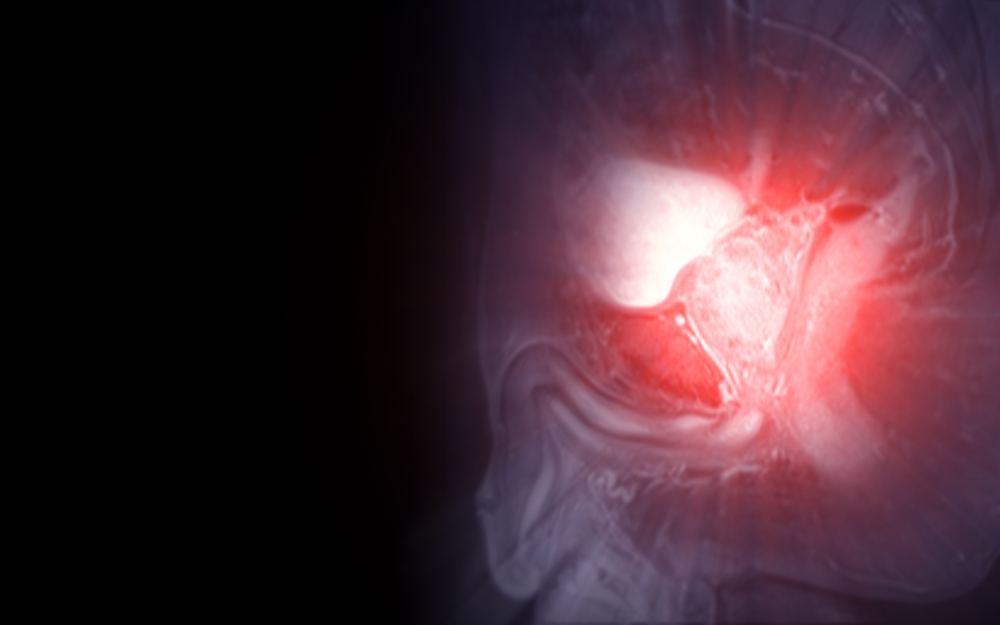
In the world of medical diagnostics, imaging and pathology have long been two distinct but complementary pillars. A radiologist interprets an MRI to identify a suspicious lesion, and a pathologist examines a tissue sample from that lesion to provide a definitive diagnosis. While these fields work in tandem, they have traditionally operated in separate silos. Today, artificial intelligence is breaking down those walls, creating a powerful synergy between imaging and pathology to achieve a new level of diagnostic precision, particularly in the fight against prostate cancer.
Advanced AI systems like ProstatID™ are not just trained on images; they are trained on outcomes. The “ground truth” that teaches these models to be so accurate comes directly from biopsy pathology data. By correlating the subtle patterns on an MRI scan with the concrete cellular evidence from a pathologist’s microscope, AI learns to make predictions that are deeply rooted in biological reality. This integration is the key to creating a tool that can more accurately identify clinically significant cancer and differentiate it from benign conditions.
This article explores the critical role of pathology data in training next-generation medical AI. We will uncover how this integration process works, why it is essential for building a trustworthy diagnostic tool, and how it is revolutionizing the accuracy of MRI-based predictions for prostate cancer.
The Two Halves of the Diagnostic Puzzle: MRI and Pathology
To understand the power of integrating them, we first need to appreciate the unique role each plays in the prostate cancer diagnostic pathway.
The Role of MRI: Seeing the Unseen
Multiparametric Magnetic Resonance Imaging (mpMRI) has become the gold standard for non-invasively visualizing the prostate gland. It provides detailed anatomical images and functional information that can reveal areas suspicious for cancer. An mpMRI study typically includes several key sequences:
- T2-weighted (T2W) images: These provide a high-resolution map of the prostate’s anatomy. Cancerous tissue often appears as a dark, ill-defined area on T2W images.
- Diffusion-Weighted Imaging (DWI): This sequence measures the random motion of water molecules. In dense cancerous tissue, water movement is restricted, causing the area to appear bright on DWI scans.
- Apparent Diffusion Coefficient (ADC) maps: These are quantitative maps derived from DWI. Cancerous tissue typically has low ADC values, appearing dark on these maps.
A radiologist synthesizes the information from these sequences to identify and grade suspicious lesions using a standardized scale like the PI-RADS (Prostate Imaging Reporting and Data System). The PI-RADS score, from 1 (very low likelihood) to 5 (very high likelihood), estimates the probability of clinically significant cancer. However, this interpretation is subjective and relies on the radiologist’s experience. Benign conditions like inflammation (prostatitis) or benign prostatic hyperplasia (BPH) can often mimic the appearance of cancer, leading to diagnostic uncertainty.
The Role of Pathology: The Definitive Answer
While an MRI provides a suspicion, the definitive diagnosis of prostate cancer can only be made by examining tissue under a microscope. This is done through a biopsy, where a urologist uses needles to collect small core samples of tissue from the prostate, often guided by the suspicious areas identified on the MRI.
A pathologist then analyzes these tissue samples to determine two critical things:
- Is cancer present? The pathologist identifies the presence of malignant cells.
- How aggressive is it? If cancer is found, it is graded using the Gleason grading system. The pathologist identifies the two most common cancer cell patterns and assigns each a grade from 3 to 5. These two grades are added together to produce a Gleason score (e.g., 3+4=7). A higher Gleason score indicates a more aggressive, faster-growing cancer.
The pathology report is considered the “ground truth.” It is the undisputed biological fact against which all other diagnostic tests are measured.
Bridging the Gap: How AI Learns from Ground Truth
A medical AI model learns in a supervised manner, much like a student. You show it a problem (an MRI scan) and then give it the answer key (the pathology report). By repeating this process thousands of times, it learns to connect the problem to the solution. The integration of pathology data is the cornerstone of this entire process.
Building a Biopsy-Verified Dataset
The first and most crucial step is to build a massive, high-quality training dataset where every MRI scan is directly linked to its corresponding pathology results. This is a meticulous and labor-intensive process.
- Data Collection: Researchers gather thousands of historical prostate MRI cases from multiple institutions.
- Image-Pathology Correlation: For each case, the team must locate the precise biopsy data that corresponds to the lesions seen on the MRI. This involves mapping the location of each biopsy core to its position within the prostate on the MRI scan.
- Precise Annotation: Expert radiologists then annotate the MRI scans, drawing exact boundaries (segmenting) around each suspicious lesion.
- Labeling with Ground Truth: Each segmented lesion is then labeled with its definitive pathology result. For example, a lesion on the MRI is tagged with its confirmed Gleason score from the biopsy core taken from that exact location. The dataset also includes thousands of examples of biopsied areas that were confirmed to be benign (BPH, prostatitis, etc.).
This creates an incredibly rich dataset. The AI is not just learning from a radiologist’s opinion (a PI-RADS score); it is learning from the confirmed cellular truth of what is and is not clinically significant cancer. This is the fundamental principle behind the training of ProstatID™, which was developed using over 1,000 biopsied cases and more than 6,000 biopsy points.
The Deep Learning Training Process
With this pathology-verified dataset, the deep learning model can begin its training. The AI, typically a Convolutional Neural Network (CNN), is shown an MRI scan and tasked with making a prediction about the lesions it sees.
- The Forward Pass: The AI analyzes the input MRI sequences (T2W, DWI, ADC) and outputs its own prediction—for example, a risk score for each lesion indicating the likelihood of it being a Gleason score 7 or higher.
- The Loss Function: The AI’s prediction is then compared to the ground truth from the pathology report. A “loss function” calculates the error, or the difference between the AI’s prediction and the actual Gleason score.
- Backpropagation: This error is then propagated backward through the network’s layers. An optimization algorithm makes tiny adjustments to the AI’s internal parameters to reduce the error on the next attempt.
This cycle is repeated millions of times with different cases. Over time, the AI learns the incredibly subtle and complex imaging patterns—textures, intensities, and shapes across multiple sequences—that are highly correlated with specific Gleason scores. It learns to differentiate the signal pattern of aggressive cancer from that of low-grade cancer or inflammation with a level of nuance that surpasses human capability.
The Impact of Pathology Integration on Predictive Accuracy
Integrating pathology data into AI training isn’t just a technical detail; it’s what elevates the AI from an imaging tool to a true diagnostic intelligence. This deep integration leads to several transformative benefits.
1. Superior Differentiation of Clinically Significant Cancer
One of the biggest challenges in prostate cancer is distinguishing indolent, low-grade cancers (e.g., Gleason 6) that may not require immediate treatment from aggressive, clinically significant cancers (Gleason 7 and above) that do. On an MRI, these can look very similar.
Because the AI is trained directly on Gleason scores, it learns to identify the specific imaging biomarkers that are most predictive of aggressive disease. It moves beyond simply detecting an “abnormality” to classifying its potential threat level. This helps clinicians focus their attention and resources on the patients who need it most, while providing greater confidence to recommend active surveillance for those with low-risk disease. This precision helps reduce over-treatment of indolent cancer, a major goal in modern urology.
2. Drastically Reducing False Positives
Many benign conditions can mimic cancer on an MRI, leading to false positives. A false positive can cause significant anxiety for the patient and their caregivers and often leads to unnecessary biopsies, which are invasive and carry risks.
By training on thousands of biopsy-confirmed benign cases (prostatitis, BPH, cysts, etc.), the AI becomes an expert at recognizing these “impostors.” It learns the unique signal characteristics of these benign conditions and can more confidently classify a lesion as non-suspicious. This improves the specificity of the MRI reading, giving radiologists the confidence to dismiss benign findings and avoid triggering a false alarm. The result is fewer unnecessary biopsies and a more efficient healthcare system.
3. Improving Confidence in Negative Predictions
A false negative—missing a real cancer—is the most dangerous error in diagnostics. An AI trained on pathology data provides a more robust safety net. It has learned from a vast library of confirmed cancers, including those that were small, in unusual locations, or had atypical appearances.
When an AI like ProstatID™ reports a scan as negative, that prediction is backed by an algorithm that has been rigorously tested against thousands of confirmed cases. This gives clinicians a higher degree of confidence that no significant disease has been overlooked, providing greater peace of mind for both the doctor and the patient.
4. Objective and Reproducible Results
Human interpretation of MRIs is inherently subjective. Two highly skilled radiologists can look at the same scan and come to different conclusions—a phenomenon known as inter-reader variability.
An AI provides a fully objective and reproducible analysis. Because its predictions are based on a mathematical model trained on hard pathological data, it delivers the same result for the same scan every single time. This standardization helps to level the playing field, ensuring that the quality of the MRI interpretation is consistently high, regardless of who is reading the scan or where it is being read. It moves the practice from a subjective art toward an objective science.
The Future is Integrated: AI as a bridge between disciplines
The integration of pathology data into AI training is a paradigm shift. It is transforming AI from a tool that simply describes images into one that predicts biological reality. This creates a virtuous cycle: better AI predictions lead to more accurate biopsy targeting, which in turn generates higher-quality data to further train and refine the next generation of AI models.
This deep integration is also fostering closer collaboration between radiologists and pathologists. The AI serves as a common language, providing quantitative data that links the findings of both specialties. A radiologist using a pathology-trained AI can speak with greater certainty about the likely nature of a lesion, and a pathologist receiving a case from an AI-assisted MRI has better prior information about the target.
Looking forward, this integration will only become deeper. We are moving toward a future where AI might one day analyze digital pathology slides alongside MRI scans, creating a comprehensive “radiopathomics” model that delivers an even more precise and personalized diagnosis. The potential for these future applications is immense, promising a new era of proactive and predictive medicine.
For now, the impact is already clear. By learning from the definitive truth of the pathologist’s microscope, AI systems like ProstatID™ are making MRI-based predictions more accurate, reliable, and clinically valuable than ever before. This powerful synergy between imaging and pathology is not just improving diagnostic reports; it’s improving patient outcomes and setting a new standard for the future of cancer care.
Pioneering Cancer Detection with AI and MRI (and CT)
At Bot Image™ AI, we’re on a mission to revolutionize medical imaging through cutting-edge artificial intelligence technology.
Contact Us