

Blog
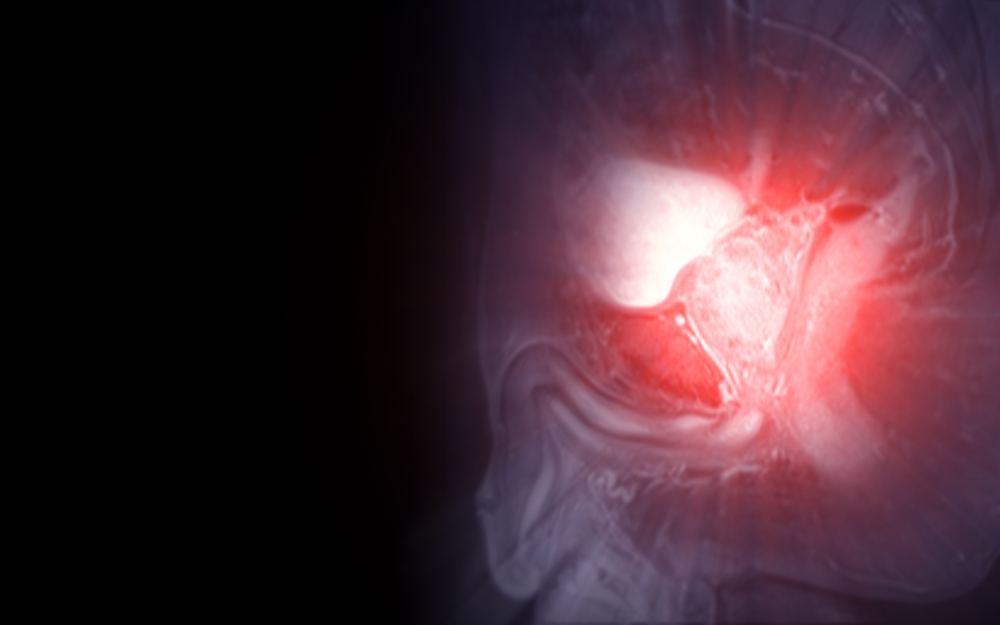
The intersection of artificial intelligence and medical imaging is transforming diagnostics, offering new levels of precision and efficiency. Nowhere is this more evident than in the fight against prostate cancer. Magnetic Resonance Imaging (MRI) has become a cornerstone of detection, but the complexity of these scans presents challenges for human interpretation. This is where deep learning comes in, training sophisticated models to see what the human eye might miss. Understanding how these powerful AI systems are developed is key to appreciating their role in modern medicine.
The process is not as simple as feeding images into a computer. It involves curating vast and diverse datasets, meticulous annotation by expert radiologists, and a complex training and validation cycle designed to build a reliable diagnostic tool. The goal is to create an AI that not only detects suspicious lesions but also helps differentiate between benign conditions and clinically significant cancer. This technology, exemplified by tools like ProstatID™, is empowering clinicians to make more confident, data-driven decisions, ultimately improving patient outcomes.
This article will pull back the curtain on the intricate process of training deep learning models for prostate cancer detection on MRI. We will explore the foundational data, the architectural choices of the models, the challenges of avoiding bias, and the rigorous testing required to bring a tool like this into clinical practice.
The Foundation: Building a High-Quality Dataset
A deep learning model is only as good as the data it’s trained on. For an AI designed to detect prostate cancer, this data consists of thousands of prostate MRI scans. However, simply collecting images is not enough. The quality, diversity, and annotation of the dataset are what truly determine the model’s future performance.
Sourcing and Curating MRI Scans
The first step is gathering a substantial number of prostate MRI studies. These images must come from a wide range of sources to ensure the model becomes robust and generalizable.
- Diverse Machinery: MRI scans are produced by machines from different manufacturers (e.g., Siemens, Philips, GE) and with varying magnetic field strengths (e.g., 1.5T, 3T). A model trained only on images from a single type of machine will struggle when it encounters scans from another. Therefore, the training dataset must include a mix of images from different vendors and system configurations. This is crucial for creating a system-agnostic AI.
- Varied Patient Demographics: Prostate anatomy and the appearance of cancer can vary based on age, ethnicity, and genetics. A dataset that reflects this diversity is essential to prevent the model from developing biases that could lead to lower accuracy for certain patient populations.
- Inclusion of Different Conditions: The prostate can be affected by numerous conditions besides cancer, such as benign prostatic hyperplasia (BPH), prostatitis (inflammation), and cysts. These conditions can alter the appearance of the prostate on an MRI and are often difficult to distinguish from cancerous tissue. A robust training dataset must include many examples of these benign conditions so the model learns to tell them apart from malignant lesions.
The Critical Role of Ground Truth: Annotation and Pathology
An MRI scan is just an image until it is paired with a definitive diagnosis, known as the “ground truth.” This is the most critical and labor-intensive part of creating the dataset. For prostate cancer, the ground truth is established through biopsy and pathology.
The Annotation Process
Annotation is the process where expert radiologists meticulously review each MRI scan and label areas of interest. They identify and outline suspicious lesions, a process known as segmentation. Each segmented lesion is then assigned a score based on a standardized system like the Prostate Imaging Reporting and Data System (PI-RADS). This system grades the likelihood of clinically significant cancer on a scale of 1 to 5.
This process is painstaking. A radiologist must analyze multiple MRI sequences for each patient, such as:
- T2-weighted (T2W) images: These provide detailed anatomical views of the prostate gland.
- Diffusion-Weighted Imaging (DWI): This sequence measures the movement of water molecules. Cancerous tissue is denser than healthy tissue, restricting water movement, which appears as a bright spot on DWI scans.
- Apparent Diffusion Coefficient (ADC) maps: These are calculated from DWI and provide a quantitative measure of water diffusion. Cancerous areas typically have low ADC values.
The annotators must cross-reference these sequences to accurately identify and grade lesions. The quality of these annotations directly impacts the model’s ability to learn the subtle patterns associated with cancer.
Linking to Biopsy Results
The final step in establishing ground truth is correlating the annotated MRI lesions with biopsy results. When a patient undergoes a prostate biopsy, small tissue samples are taken from suspicious areas identified on the MRI (MRI-targeted biopsy) or from standard locations (systematic biopsy). A pathologist then examines these tissue samples under a microscope to determine if cancer is present and, if so, its aggressiveness, which is graded using the Gleason score.
For the AI training dataset, each annotated lesion on the MRI must be linked to a corresponding biopsy core and its pathology report. This creates a direct connection between an image pattern and a confirmed biological reality. It’s this link that teaches the model what clinically significant prostate cancer truly looks like on an MRI, moving beyond subjective interpretation to data-backed certainty. It is through training on thousands of such biopsy-verified cases that an AI like ProstatID™ learns to differentiate cancer from benign mimickers.
Choosing and Building the Deep Learning Model
With a high-quality dataset in hand, the next phase is to choose and configure the deep learning architecture. This isn’t a one-size-fits-all decision. The model’s design must be tailored to the specific task of analyzing complex, multi-sequence medical images.
Convolutional Neural Networks (CNNs): The Eyes of AI
The most common type of model used for image analysis is the Convolutional Neural Network (CNN). CNNs are inspired by the human visual cortex and are exceptionally good at detecting patterns, shapes, and textures in images.
A CNN works by applying a series of filters (or kernels) to an input image. These filters are small matrices of numbers that slide across the image, performing mathematical operations to create “feature maps.” Early layers in the network might learn to detect simple features like edges, corners, and color gradients. As the data passes through deeper layers, these simple features are combined to recognize more complex structures, like the texture of a specific tissue type or the boundary of a lesion.
For prostate MRI, the CNN must process multiple image sequences simultaneously (T2W, DWI, ADC). This is often accomplished using a multi-channel input, where each sequence is treated as a separate color channel, similar to how a standard photo has red, green, and blue channels.
From Segmentation to Classification
The task of detecting prostate cancer involves two main steps, both of which can be handled by deep learning models:
- Lesion Segmentation: This is the process of precisely outlining the boundaries of a suspicious lesion. Models like U-Net are commonly used for this task. U-Net has an encoder-decoder structure. The encoder part (similar to a standard CNN) extracts features and reduces the spatial dimensions of the image, while the decoder part reconstructs the image, using the learned features to create a segmentation map that highlights the exact location and shape of the lesion. Precise segmentation is a key feature that improves workflow for radiologists.
- Lesion Classification: Once a lesion is segmented, the next step is to classify it. Is it benign? Is it low-grade cancer? Or is it clinically significant cancer that requires intervention? The model analyzes the features extracted from the segmented region across all MRI sequences to predict a risk score. This score, similar to a PI-RADS category, provides the clinician with a quantitative assessment of the lesion’s likelihood of being aggressive cancer.
Advanced models combine these tasks. They might first perform segmentation to identify all potential lesions and then run a classification network on each identified region. This dual approach ensures both accurate localization and reliable characterization of the disease.
The Training Process: Teaching the Model to See
Training is where the model learns from the annotated dataset. This iterative process involves showing the model thousands of examples and continuously adjusting its internal parameters until its predictions align with the ground truth.
The Cycle of Learning: Forward and Backward Propagation
The training process for a deep learning model involves a continuous loop of two key steps:
- Forward Propagation: A batch of MRI scans from the training set is fed into the model. The model processes the images through its layers and produces an output—for example, a segmentation map and a classification score for any detected lesions.
- Backward Propagation (Backpropagation): The model’s output is compared to the ground truth (the expert annotations and pathology results). A “loss function” calculates the difference, or error, between the model’s prediction and the actual diagnosis. This error value is then propagated backward through the network. An optimization algorithm, such as Adam or SGD, uses this error information to make tiny adjustments to the model’s internal parameters (the weights of its filters).
This cycle is repeated millions of times, with the model seeing different batches of images in each iteration. With every adjustment, the model gets slightly better at minimizing the error, effectively learning the complex patterns that differentiate cancerous tissue from healthy or benign tissue.
Validation and Testing: Ensuring Reliability
The entire dataset is not used for training. It is typically split into three distinct sets:
- Training Set (e.g., 70-80%): This is the largest portion of the data, used for the primary learning process described above.
- Validation Set (e.g., 10-15%): During training, the model’s performance is periodically checked against the validation set. This data is not used for backpropagation, so it provides an unbiased estimate of how well the model is learning to generalize. It helps data scientists tune hyperparameters (like learning rate) and prevent “overfitting.” Overfitting occurs when a model memorizes the training data instead of learning general patterns, causing it to perform poorly on new, unseen images.
- Test Set (e.g., 10-15%): This set is kept completely separate and is used only once, after the training process is complete. It serves as the final, unbiased evaluation of the model’s performance. The results on the test set demonstrate how the AI is expected to perform in a real-world clinical setting on scans it has never seen before.
This rigorous separation of data is fundamental to building a trustworthy medical AI. It ensures that the reported accuracy is a true reflection of the model’s capabilities, not just its ability to recall examples it has already seen.
Overcoming Challenges in AI Training
Training a medical AI is fraught with challenges that require careful planning and sophisticated solutions. Addressing these issues is essential for developing a tool that is not only accurate but also fair, reliable, and clinically useful.
The “Black Box” Problem and Interpretability
One of the long-standing criticisms of deep learning is the “black box” problem. While a model may make a highly accurate prediction, it’s not always clear why it made that decision. In medicine, this is a significant concern. Clinicians need to trust the tools they use, and that trust is built on understanding the reasoning behind a recommendation.
To address this, researchers are developing methods for AI interpretability. These techniques aim to shed light on the model’s decision-making process.
- Saliency Maps: These are heatmaps that highlight which pixels in the input image were most influential in the model’s final prediction. For prostate MRI, a saliency map can show the radiologist the specific area within a lesion that the AI found most suspicious, allowing the clinician to focus their own expert review on that region.
- Feature Visualization: This involves visualizing the patterns that individual neurons or layers in the network have learned to detect. This can reveal whether the model is focusing on clinically relevant features or if it has learned a “shortcut” based on irrelevant artifacts in the images.
By making the AI’s reasoning more transparent, these methods build confidence and turn the model from a black box into a collaborative diagnostic assistant.
Data Scarcity and Augmentation
Even with access to hospital archives, collecting a sufficiently large and diverse dataset of biopsy-verified prostate MRI scans is a major hurdle. Medical data is highly protected for privacy reasons, and creating high-quality annotations is expensive and time-consuming.
To overcome the limitations of a finite dataset, data scientists use a technique called data augmentation. This involves creating new, synthetic training examples by applying random transformations to the existing images. For MRI scans, these transformations might include:
- Slight rotations or shifts
- Zooming in or out
- Flipping the image horizontally
- Adjusting brightness and contrast
- Adding small amounts of random noise
These augmentations create variations of the training data, teaching the model to be robust to minor changes in patient positioning, image quality, or scanning parameters. This makes the model more resilient and better able to generalize to the wide variety of scans it will encounter in a real clinical environment.
Avoiding Bias and Ensuring Fairness
An AI model can inadvertently learn biases present in its training data. For example, if a dataset primarily contains images from one demographic group, the model may be less accurate for patients from other groups. Similarly, if the dataset has an imbalance—far more examples of benign cases than cancerous ones—the model might become biased toward predicting “no cancer.”
Strategies to mitigate bias include:
- Balanced Datasets: Actively curating the dataset to ensure representation across different demographics, scanner types, and disease severities.
- Weighted Loss Functions: During training, the loss function can be adjusted to penalize errors on underrepresented classes more heavily. For instance, misclassifying a rare but aggressive cancer would incur a larger penalty than misclassifying a common benign condition, forcing the model to pay more attention to the minority class.
- Continuous Auditing: Regularly testing the model’s performance on specific subpopulations to identify and correct any performance gaps.
Ensuring fairness is an ongoing process that is critical for the ethical deployment of AI in healthcare. It’s a responsibility that developers of tools like ProstatID™ take seriously, striving to build technology that serves all patients equally. The commitment extends not just to patients but also to their support systems, providing resources for those who help manage their care journey, like the information found for caregivers.
The Impact of Trained AI in Prostate Cancer Detection
Once a deep learning model is successfully trained, validated, and cleared for clinical use, its impact can be profound. It serves as a powerful assistant to radiologists, enhancing their capabilities and streamlining their workflow.
Improving Diagnostic Accuracy and Consistency
Even for experienced radiologists, interpreting prostate MRIs can be challenging and subjective. Inter-reader variability, where two radiologists interpret the same scan differently, is a well-documented issue.
AI helps by providing an objective, data-driven analysis. It can detect subtle patterns that may be at the threshold of human perception. By flagging suspicious areas with a quantitative risk score, the AI provides a consistent “second opinion” on every scan. Clinical studies have shown that using AI as a concurrent reader significantly improves the diagnostic performance of radiologists, increasing their sensitivity for detecting clinically significant cancer while reducing the number of false positives.
Enhancing Workflow Efficiency
Reading a prostate MRI study is a time-consuming task. Radiologists must mentally fuse information from multiple image series and meticulously inspect the entire gland. An AI can automate the most laborious parts of this process.
In a “zero-click” workflow, the AI automatically processes the MRI as soon as it’s available. Within minutes, it returns a new series with suspicious lesions already segmented and color-coded by risk level. This allows the radiologist to immediately focus their attention on the areas of highest concern, drastically reducing reading time. This efficiency means faster turnaround times for reports, allowing referring physicians and patients to get answers sooner.
The Future of AI in Oncology
The training process for deep learning models is the foundation of a new era in medical diagnostics. The same principles used to train an AI for prostate cancer can be applied to other areas of oncology and beyond. The potential for future applications is vast, ranging from detecting other cancers like pancreatic or liver cancer on CT and MRI scans to predicting treatment response and monitoring disease progression.
The journey from a raw MRI scan to a life-saving insight is a testament to the power of data, expert human knowledge, and sophisticated algorithms. By understanding how these deep learning models are trained, we can better appreciate the rigor and innovation driving the future of healthcare—a future where artificial intelligence and human expertise work together to achieve earlier detection, more precise diagnoses, and better outcomes for every patient.
Pioneering Cancer Detection with AI and MRI (and CT)
At Bot Image™ AI, we’re on a mission to revolutionize medical imaging through cutting-edge artificial intelligence technology.
Contact Us