

Blog

The approach to managing prostate cancer is undergoing a profound transformation. For decades, the guiding principle was simple: find cancer early and treat it aggressively. This strategy, born from the best intentions, has saved countless lives. However, it also created a widespread problem of overtreatment—subjecting men to invasive therapies for cancers that may have never posed a real threat. This often resulted in life-altering side effects, leaving many to wonder if the cure was worse than the disease.
Today, artificial intelligence (AI) is rewriting the rules. By enhancing the power of medical imaging, AI is ushering in an era of precision medicine where early detection is smarter, not just sooner. It’s about finding the right cancers to treat—the aggressive ones that require immediate action—while confidently identifying the slow-growing ones that can be safely monitored. This new paradigm promises to significantly reduce overtreatment and its associated side effects.
This article will explore how AI-powered early detection is changing the landscape of prostate cancer care. We’ll examine the historical problem of overtreatment, explain how AI technology helps differentiate between high-risk and low-risk cancers, and detail the profound benefits this brings to patients in terms of preserving quality of life.
The Long Shadow of Overtreatment in Prostate Cancer
To understand the value of AI, we must first look at the history of prostate cancer screening and the challenges it created. The widespread adoption of the prostate-specific antigen (PSA) blood test in the 1990s led to a surge in diagnoses. While this helped find more cancers, it also unearthed a vast number of indolent, or slow-growing, tumors.
The PSA Dilemma: Finding Too Much of a Good Thing
The PSA test is a sensitive but not specific marker for prostate cancer. Elevated levels can be caused by cancer, but also by benign conditions like an enlarged prostate (BPH) or inflammation. This ambiguity often triggered a cascade of medical interventions, starting with a systematic biopsy.
A systematic biopsy involves taking about 12 core samples from the prostate in a grid-like pattern. This procedure carries risks, including infection and bleeding, and often led to one of two outcomes:
- A negative biopsy, meaning the high PSA was a false alarm, causing unnecessary anxiety and a painful procedure.
- A positive biopsy, which often revealed low-grade, low-volume cancer (e.g., a small amount of Gleason 6 cancer).
The discovery of any cancer, no matter how low-risk, historically led to aggressive treatment. The “watchful waiting” approach of the past was often fraught with anxiety for both patient and doctor, pushing many toward surgery or radiation.
The High Cost of Treating Indolent Cancer
The standard treatments for prostate cancer, radical prostatectomy (surgical removal of the prostate) and radiation therapy, are highly effective at eliminating cancer. However, they can also cause significant and often permanent side effects. The prostate is located near crucial nerves and muscles that control urinary and sexual function. Damage to these structures can lead to:
- Erectile Dysfunction (ED): The inability to achieve or maintain an erection is a common side effect, affecting a significant percentage of men after treatment.
- Urinary Incontinence: This can range from minor leakage when coughing or sneezing to a complete loss of bladder control.
For a man with a low-risk cancer that may never have spread or caused symptoms in his lifetime, these side effects represent a drastic and unnecessary reduction in quality of life. The psychological and emotional toll is immense, and it highlights the core problem of overtreatment: the treatment causes more harm than the disease itself. This has also had a staggering financial impact, as discussed in The Economic Impact of Early Detection.
How AI Redefines Early and Accurate Detection
The goal of modern prostate cancer screening is not just to find cancer, but to find clinically significant cancer—the aggressive tumors that need to be treated. This requires a tool that can see beyond a simple PSA number and accurately characterize the nature of a suspicious finding. This is where AI-enhanced MRI comes in.
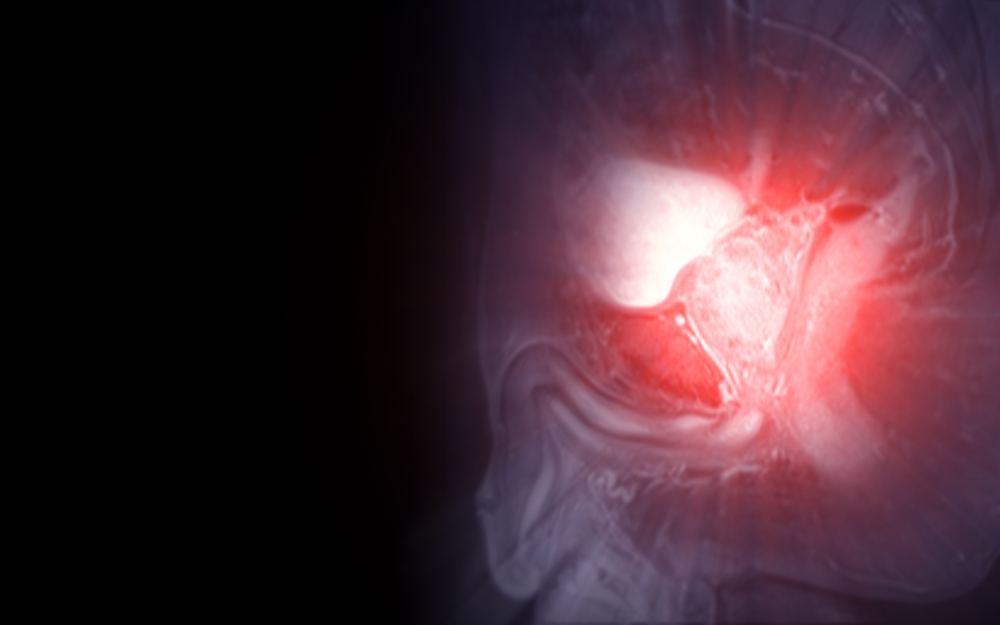
An MRI provides a detailed picture of the prostate, but interpreting these images accurately is challenging. Artificial intelligence platforms like ProstatID™ act as a powerful analytical engine, decoding the vast amount of data in an MRI scan to provide a clear and objective risk assessment.
Differentiating High-Risk from Low-Risk Disease
AI’s greatest strength lies in its ability to learn and recognize the subtle signatures of aggressive cancer. The software is trained on thousands of MRI scans that have been correlated with biopsy results (the “ground truth”). Through this process, it learns to distinguish the tissue characteristics of high-grade cancer from those of low-grade cancer or benign conditions.
Here’s how AI achieves this level of precision:
- Quantitative Analysis: Unlike the human eye, which relies on qualitative visual assessment, AI performs a quantitative analysis. It measures hundreds of features within a suspicious lesion, including cell density (via diffusion-weighted imaging), tissue texture, shape, and boundary definition.
- Objective Scoring: Based on this deep analysis, the AI assigns a risk score to each lesion. This score directly correlates to the likelihood of it being a clinically significant cancer. This objectivity removes the guesswork and variability that can occur with human-only interpretation, especially in ambiguous cases.
- Differentiating from Mimics: The AI algorithm becomes highly adept at recognizing conditions that can look like cancer on an MRI, such as prostatitis or BPH. By confidently identifying these benign mimics, the AI helps prevent false alarms that would otherwise lead to unnecessary biopsies.
When a lesion is identified, the AI provides a clear, data-backed assessment of its threat level. A very low AI risk score gives doctors and patients the confidence to opt for active surveillance instead of rushing to an invasive procedure.
The Power of Active Surveillance, Backed by Data
Active surveillance is a management strategy for low-risk prostate cancer. Instead of immediate treatment, the cancer is closely monitored through regular PSA tests, physical exams, and periodic imaging or biopsies. Treatment is only initiated if there are signs of the cancer becoming more aggressive.
Historically, the uncertainty of “watching” a cancer made many patients and doctors nervous. The fear was always, “What if we miss something? What if it starts to grow?”
AI-powered MRI provides the safety net needed to make active surveillance a truly viable and stress-free option.
- High Confidence in the Initial Diagnosis: When a highly accurate, AI-enhanced MRI report indicates a low-risk lesion, the decision to start active surveillance is based on strong evidence.
- Reliable Monitoring: Follow-up AI-enhanced MRIs can precisely track the size and characteristics of the lesion over time. The quantitative nature of AI analysis allows for objective comparisons between scans. Any meaningful change can be detected early, providing a clear trigger to reconsider treatment long before the cancer becomes a systemic threat.
By providing this level of confidence, AI empowers more men to choose active surveillance, thereby directly reducing the rates of overtreatment for indolent disease.
The Direct Link Between Better Detection and Fewer Side Effects
Reducing overtreatment is the primary way AI helps minimize side effects. By avoiding unnecessary surgeries and radiation for low-risk cancers, men are spared the potential for erectile dysfunction and incontinence altogether. However, the benefits don’t stop there. Even for men who do require treatment for aggressive cancer, AI-powered early detection plays a crucial role in preserving quality of life.
Enabling More Precise, Nerve-Sparing Treatments
When aggressive cancer is detected, the goal is to eliminate it completely while causing as little collateral damage as possible. The success of this depends on knowing exactly where the tumor is, how large it is, and where its boundaries lie.
This is where the detailed output from an AI platform becomes invaluable for treatment planning:
- Precise Tumor Mapping: The AI generates a 3D map of the prostate, precisely outlining the location and contours of the tumor. This gives the surgeon or radiation oncologist an exact blueprint to work from.
- Facilitating Nerve-Sparing Surgery: During a radical prostatectomy, the surgeon’s goal is to remove the prostate while preserving the delicate nerve bundles that run alongside it, which are essential for erectile function. The AI’s 3D map allows the surgeon to see the tumor’s proximity to these nerves, helping them make informed decisions in real-time to spare as much nerve tissue as possible without compromising cancer removal.
- Improving Targeted Radiation: For radiation therapy, including techniques like stereotactic body radiation therapy (SBRT), the AI’s precise tumor segmentation allows for highly focused radiation beams. This concentrates the dose on the cancerous tissue while minimizing exposure to the surrounding healthy bladder and rectum, reducing the risk of urinary and bowel side effects.
Supporting Focal Therapy
Focal therapy is an emerging treatment strategy that aims to destroy only the cancerous part of the prostate, leaving the rest of the gland intact. This approach, which includes methods like high-intensity focused ultrasound (HIFU) and cryotherapy, has the potential for far fewer side effects than whole-gland treatments.
The success of focal therapy is entirely dependent on two things:
- Accurately identifying men who are suitable candidates (i.e., those with a single, well-defined tumor).
- Knowing the exact location and boundaries of the tumor to be treated.
AI-enhanced MRI is the enabling technology for focal therapy. It provides the certainty needed to confirm that the cancer is localized to one area and delivers the precise map required to guide the ablative energy. By making focal therapy a more viable option for the right patients, AI opens another pathway to effective cancer control with a significantly lower risk of side effects.
The Value of a System-Agnostic Approach
A crucial aspect of this technological revolution is accessibility. The benefits of AI should not be limited to a few elite hospitals with specific MRI machines. This is why system-agnostic AI matters. Platforms like ProstatID™ are designed to work with MRI scans from any vendor, ensuring that high-quality, AI-enhanced analysis is available to patients and clinicians everywhere. This democratic approach is key to making reduced overtreatment and fewer side effects the new standard of care across the healthcare system.
A New Era of Patient-Centric Prostate Cancer Care
The integration of artificial intelligence into early prostate cancer detection is not just an incremental improvement; it is a fundamental shift in philosophy. It moves us away from a one-size-fits-all approach to a personalized, data-driven strategy that prioritizes the patient’s long-term quality of life.
By delivering a more accurate and objective assessment of cancer risk, AI provides the confidence needed to avoid aggressive treatment when it’s not necessary. For men with low-risk disease, this means being able to live their lives free from the shadow of treatment-related side effects, secure in the knowledge that they are being monitored with the best technology available.
For men who do need treatment, AI provides the detailed roadmap to make that therapy as precise and targeted as possible, maximizing the chances of a cure while minimizing collateral damage. The result is better outcomes across the board—not just in terms of survival, but in terms of life after cancer. This technology empowers patients and their doctors to make smarter, more informed decisions, heralding a future where a prostate cancer diagnosis no longer means an automatic choice between the disease and a life with debilitating side effects.
Pioneering Cancer Detection with AI and MRI (and CT)
At Bot Image™ AI, we’re on a mission to revolutionize medical imaging through cutting-edge artificial intelligence technology.
Contact Us