


Blog
Clinical Trials and Prospective Validation of MRI-Based Prostate Cancer Classification
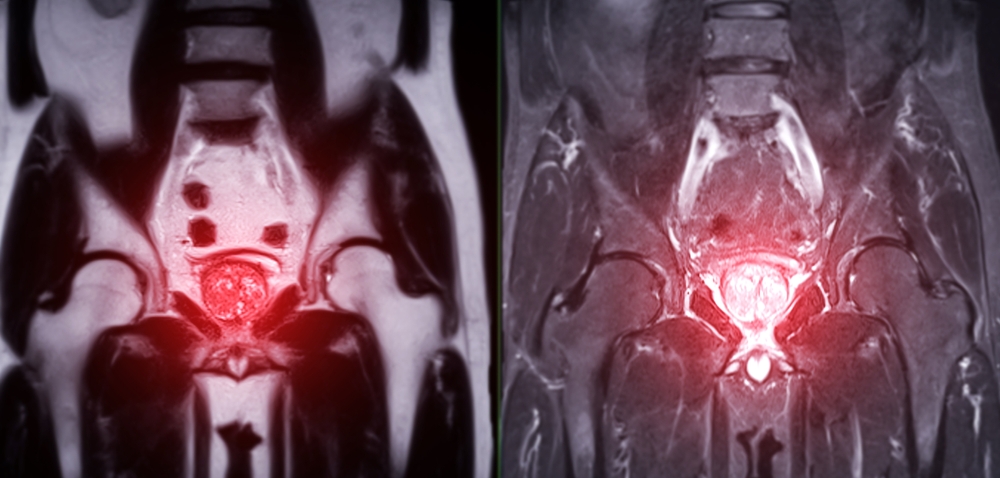
Artificial intelligence in prostate MRI has made enormous strides. Research has shown that AI can identify, segment, and classify suspicious lesions with impressive accuracy. However, for this technology to make a real difference in patient care, it must prove its worth outside the controlled environment of a research lab. True clinical impact depends on prospective validation and regulatory-grade clinical trials. The journey from strong lab performance to improved patient outcomes defines the next frontier for AI in prostate cancer imaging, ensuring that these powerful tools are reliable, safe, and effective in the real world.
Why Prospective Validation Matters
Building an AI model that works on historical data is an important first step, but it is not the final one. For clinicians to trust and adopt AI, they need to see evidence that it performs consistently in their own daily practice. Prospective validation provides this crucial evidence.
From retrospective research to clinical reality
Most AI models begin their life trained and tested on retrospective data—historical medical images and reports collected in the past. This approach is excellent for initial development and proof-of-concept. However, retrospective datasets are often highly curated and may not capture the full spectrum of variability found in day-to-day clinical work. Patient populations, scanner models, and imaging techniques can differ significantly from the data the AI was trained on, potentially leading to a drop in performance.
Bridging the gap between algorithm and patient care
Prospective validation is the bridge between a promising algorithm and a trusted clinical tool. It involves testing the AI in a live clinical environment, analyzing new patient data as it is acquired. This process demonstrates whether the AI genuinely improves diagnosis, streamlines radiologist workflow, and contributes to better patient management decisions. It answers the most important question: does this technology help doctors and patients in a meaningful way?
The foundation of regulatory approval and clinician trust
Regulatory bodies like the U.S. Food and Drug Administration (FDA) and European authorities require robust evidence of safety and effectiveness before a medical device can be marketed. Prospective clinical trials are the gold standard for generating this evidence. They show that an AI tool performs consistently and reliably across different hospitals, patient demographics, and equipment. This rigorous testing is what builds the foundation of trust, giving clinicians the confidence to integrate AI into their prostate MRI reading process.
Understanding Prospective Validation in AI Imaging
To appreciate the strength of prospective validation, it is helpful to compare it directly with retrospective analysis. The two study designs serve different purposes, but prospective trials offer a higher level of clinical evidence.
Retrospective vs. prospective study design
A retrospective study looks backward. Researchers gather pre-existing data, such as a collection of bpMRI scans from the last five years, and apply the AI model to it. The results are then compared to the known outcomes (e.g., biopsy results). This design is efficient and cost-effective for initial model development.
A prospective study, on the other hand, looks forward. Researchers design the trial first, then enroll new patients and collect data in real time according to a strict protocol. The AI analyzes these new cases as they occur, and its performance is measured against clinical outcomes as they are determined.
Key differences and advantages of prospective validation
Prospective validation offers several key advantages. It minimizes selection bias because patients are enrolled based on predefined criteria, not on whether their existing data is “good” or “clean.” It also reflects the realities of a busy clinical workflow, including imperfect images and diverse patient conditions. This allows developers to see how the AI lesion classification tool truly performs under pressure, providing a more honest assessment of its generalizability and robustness.
Multi-center and real-time deployment studies
The most powerful form of prospective validation is a multi-center study. By deploying the AI tool across multiple hospitals or imaging centers, researchers can prove that it works reliably on different MRI scanners, with different technologists, and in diverse patient populations. This type of study is essential for demonstrating that the AI is not just tuned to one specific environment but is a truly vendor-agnostic and generalizable solution, a critical hurdle for regulatory bodies like the FDA.
Designing a Clinical Trial for MRI-Based AI Tools
A successful clinical trial for a prostate MRI AI tool requires careful planning, from defining the goals to choosing the right metrics for success. Every step is designed to produce clear, unbiased, and clinically relevant evidence.
Defining trial objectives and endpoints
The first step is to establish what the trial aims to prove. Common objectives include:
- Diagnostic Accuracy: Demonstrating the AI’s ability to improve lesion detection and classification, often measured against biopsy results.
- Workflow Efficiency: Measuring whether the AI reduces the time it takes for a radiologist to read a prostate MRI.
- Clinical Decision-Making: Assessing the AI’s impact on treatment planning, such as helping to decide between active surveillance and immediate intervention.
Endpoints are the specific, measurable outcomes used to determine if the objectives were met. For example, an endpoint might be the change in sensitivity for detecting clinically significant prostate cancer with AI assistance versus without.
Prospective study phases
Clinical trials for medical AI often proceed in phases:
- Pilot or Feasibility Studies: These are small-scale trials designed to test the technical performance and safety of the AI in a limited clinical setting. They help iron out any integration issues before a larger, more expensive trial begins.
- Pivotal Clinical Trials: These are large-scale, often multi-center studies intended to provide the definitive evidence of the AI’s efficacy and safety needed for regulatory clearance. The data from these trials forms the core of submissions to the FDA or other agencies.
Choosing performance metrics
Selecting the right performance metrics is vital. Common metrics for prostate MRI AI include:
- Sensitivity and Specificity: Sensitivity measures how well the AI identifies true positive cases (detecting cancer when it is present), while specificity measures its ability to identify true negative cases (correctly ruling out cancer when it is absent).
- Area Under the Curve (AUC): AUC provides a single value summarizing the overall diagnostic performance of the AI across all possible thresholds. An AUC of 1.0 represents a perfect test.
- Clinical Endpoints: These can include the rate of unnecessary biopsies avoided, a shift in PI-RADS scores, or improved inter-reader agreement among radiologists.
Data Standardization and Trial Infrastructure
For a clinical trial to produce reliable results, especially one conducted across multiple sites, a solid infrastructure and standardized procedures are non-negotiable.
Standardized acquisition and reporting protocols
Consistency is key. All participating sites in a multi-center trial must follow harmonized MRI acquisition protocols. This ensures that images from a scanner in one city are comparable to images from a scanner in another. Likewise, using a standardized reporting framework like PI-RADS (Prostate Imaging-Reporting and Data System) ensures that radiologists are all speaking the same language when interpreting and grading lesions.
Radiologist-AI collaboration and workflow integration
A prospective trial must also measure how the AI tool fits into the existing radiologist workflow. The goal is seamless integration, not disruption. The trial should evaluate how radiologists interact with the AI’s output, whether it enhances their confidence, and if it reduces reading time without sacrificing accuracy. A well-designed AI should feel like a natural extension of the radiologist’s own expertise.
Data governance and regulatory compliance
Handling patient data requires strict adherence to privacy and security regulations. All clinical trials must receive approval from an Institutional Review Board (IRB) or ethics committee. They must also comply with data privacy laws like HIPAA in the United States or GDPR in Europe. This includes obtaining informed consent from patients and ensuring all data is de-identified and handled securely.
Regulatory Pathways for MRI-Based AI Tools
Bringing a medical AI device to market involves navigating a complex regulatory landscape. The evidence gathered during prospective clinical trials is the ticket to entry.
FDA approval process for medical AI devices
In the United States, the FDA has several pathways for medical devices, including AI software:
- 510(k) Clearance: This is the most common path. It requires the developer to demonstrate that their new device is “substantially equivalent” to a legally marketed device that is already on the market.
- De Novo Classification: This pathway is for novel, low-to-moderate risk devices that have no existing equivalent. It requires a more extensive review of clinical evidence.
- Premarket Approval (PMA): This is the most stringent pathway, reserved for high-risk devices. It requires extensive clinical trial data for results.
European CE marking and international harmonization
In Europe, AI medical devices must receive a CE mark to be sold. This certification indicates conformity with the European Medical Device Regulation (MDR), which has its own stringent requirements for clinical evidence and quality management. Organizations are working toward international harmonization to create a more unified set of standards for AI validation, making it easier to bring trusted tools to a global market.
Clinical evidence and real-world performance monitoring
Regulatory approval is not the end of the story. Manufacturers are required to conduct post-market surveillance to monitor their AI’s performance in the real world. This process ensures the tool remains safe and effective over time and allows for updates or modifications if its performance begins to drift.
Case Studies — Translating AI Validation into Clinical Impact
The theoretical importance of validation comes to life when you look at AI tools that have successfully made the journey from lab to clinic.
FDA-cleared prostate MRI AI tools
Several prostate MRI AI tools have successfully completed this journey. Bot Image’s ProstatID™, for example, is North America’s first FDA-cleared AI software for prostate cancer screening, detection, and diagnosis. This clearance was granted based on clinical evidence demonstrating its ability to assist radiologists in a real-world setting, proving its value through rigorous validation.
Demonstrated clinical outcomes
Prospective studies of leading AI tools have shown tangible benefits. These include significant improvements in inter-reader agreement, meaning radiologists of varying experience levels become more consistent in their interpretations when assisted by AI. Other demonstrated outcomes include increased diagnostic confidence and, in some cases, a reduction in the time needed to interpret complex bpMRI studies.
Lessons from recent clinical trials
Clinical trials do more than just confirm what works; they also reveal what doesn’t. Prospective validation can expose subtle weaknesses in an AI model, such as a bias toward a particular brand of MRI scanner or overfitting to a specific patient population. These lessons are invaluable, allowing developers to refine and improve their algorithms before they are widely deployed, ultimately leading to a more robust and reliable product.
Challenges in Conducting Clinical AI Trials
While essential, conducting prospective clinical trials for AI is not without its difficulties. Overcoming these challenges is key to advancing the field.
Data diversity and patient recruitment
Enrolling a sufficient number of patients who represent a diverse population can be a major hurdle. A trial needs to include patients of different ages, ethnicities, and disease severities to ensure the AI is truly generalizable. This can be time-consuming and expensive, particularly for multi-center studies.
Integration with existing radiology systems
The technical logistics of deploying an AI tool across multiple hospitals, each with its own unique IT infrastructure, can be complex. Integrating the software 실험into existing Picture Archiving and Communication Systems (PACS) and reporting workflows requires careful planning and collaboration between the AI developer and hospital IT departments.
Ethical and transparency considerations
When an AI is involved in patient care, transparency is paramount. Clinicians must understand how the AI arrives at its conclusions and retain ultimate oversight of the diagnostic process. Clinical trials must address these ethical considerations, ensuring that the AI is used as a supportive tool, not a replacement for clinical judgment.
Future Directions in Prospective AI Validation
The field of AI validation is constantly evolving. New methods are emerging to make clinical trials more efficient, adaptive, and collaborative.
Adaptive and continuous learning systems
Some advanced AI systems are designed to learn and improve over time as they process more data. This presents a new validation challenge: how to ensure safety and effectiveness when the algorithm is not static. Future regulatory frameworks will likely include processes for monitoring and re-validating these “adaptive” algorithms on an ongoing basis.
Federated multi-site clinical trials
Federated learning is a groundbreaking approach that allows AI models to be trained across multiple institutions without patient data ever leaving its source hospital. This technique preserves patient privacy while enabling the creation of more robust and diverse datasets. Federated clinical trials could make it easier to conduct large-scale, multi-center validation studies.
Toward global standards for AI clinical evaluation
As AI becomes a global standard of care, the need for universal validation standards grows. International bodies like the International Medical Device Regulators Forum (IMDRF) are working to create harmonized frameworks for the clinical evaluation of AI. This will help ensure that a tool validated in one country can be trusted in another, accelerating the adoption of safe and effective AI worldwide.
Conclusion
Prospective validation is the ultimate test of an MRI-based prostate cancer AI tool’s reliability and clinical utility. By moving beyond retrospective data and proving performance in live, real-world settings, these studies provide the indisputable evidence needed to earn regulatory approval and, most importantly, clinician confidence. As AI becomes more deeply integrated into the fabric of radiology, rigorous prospective clinical trials will remain the gold standard, ensuring that these powerful technologies truly enhance diagnostic accuracy and improve patient outcomes.
Pioneering Cancer Detection with AI and MRI (and CT)
At Bot Image™ AI, we’re on a mission to revolutionize medical imaging through cutting-edge artificial intelligence technology.
Contact Us