

Blog
How AI Supports Clinically Significant Cancer Detection (csPCa) Earlier and More Reliably

Prostate cancer is a complex disease, but not all diagnoses carry the same weight. Some forms of the disease are indolent—slow-growing and unlikely to cause harm during a man’s lifetime. Others are aggressive, lethal, and demand immediate intervention. The latter is what physicians refer to as Clinically Significant Prostate Cancer (csPCa).
Distinguishing between these two types is the “Holy Grail” of urologic oncology. For decades, the medical community has struggled with tools that either miss aggressive cancers (false negatives) or flag harmless ones (false positives), leading to overtreatment.
Today, a new ally has entered the fight. Artificial Intelligence (AI) is transforming the landscape of early prostate cancer diagnosis. By analyzing MRI data with a level of precision impossible for the human eye, AI supports the detection of csPCa earlier and more reliably than traditional methods alone.
This article explores the mechanics, benefits, and real-world impact of AI in csPCa detection, illustrating why this technology is not just an upgrade—it is a necessity for modern men’s health.
The Challenge of Clinically Significant Cancer (csPCa)
To understand the value of AI, we must first understand the problem. Prostate cancer is graded using the Gleason score.
- Gleason 6 (Grade Group 1): Typically considered clinically insignificant. These cancers rarely metastasize.
- Gleason 7 and above (Grade Group 2-5): These are clinically significant. They have the potential to spread and kill.
The goal of screening is to find the Gleason 7s and 8s while safely ignoring the Gleason 6s. Traditional tools like the PSA (Prostate-Specific Antigen) test fail at this distinction. A high PSA can be caused by a large, harmless prostate (BPH) just as easily as it can be caused by aggressive cancer.
Even MRI, the gold standard for imaging, has limitations. A small, aggressive tumor can look remarkably similar to a patch of benign inflammation. This ambiguity leads to two major risks:
- Missed Diagnosis: A dangerous cancer is dismissed as inflammation.
- Unnecessary Biopsy: A benign spot is biopsied, subjecting the patient to pain and infection risk for no reason.
This is where reliable cancer detection becomes critical, and where AI proves its worth.
How AI Identifies Aggressiveness
Artificial Intelligence does not “see” images in the way humans do. When a radiologist looks at a prostate MRI, they are interpreting visual patterns—shapes, shadows, and brightness. When an AI looks at the same MRI, it is analyzing quantitative data.
Radiomics and Quantitative Analysis
The field of “radiomics” involves extracting large amounts of quantitative features from medical images. AI algorithms measure the texture, entropy, and spatial relationships of pixels.
In the context of AI in csPCa detection, the algorithm is trained to recognize specific mathematical signatures associated with aggressive cell growth. Aggressive cancer cells are densely packed and restrict the movement of water molecules. On a Diffusion-Weighted Imaging (DWI) scan, this restriction appears as a dark spot.
While a human can see a dark spot, AI can measure the exact degree of darkness (the Apparent Diffusion Coefficient, or ADC value) and correlate it with thousands of proven pathology results. It knows that a specific texture combined with a specific ADC value has a 95% probability of being csPCa, whereas a slightly different texture is likely benign.
Filtering Out the Noise
One of the greatest strengths of AI is its ability to filter out “indolent” disease. By training deep learning models specifically on Gleason 7+ cases, developers have created tools that are less likely to flag low-grade cancers. This selectivity is crucial for reducing over-diagnosis and preventing the “treatment trap” where men undergo surgery for cancers that never would have harmed them.
To learn more about the specific technology powering these capabilities, visit our ProstatID™ page.
The Importance of Early Detection
“Early detection saves lives” is a medical mantra, but in prostate cancer, it comes with a caveat: it must be the right kind of detection. Finding csPCa early, while it is still organ-confined, allows for curative treatments that preserve quality of life.
The Window of Curability
Once prostate cancer breaks through the capsule of the prostate gland (extra-prostatic extension) or spreads to the lymph nodes, the prognosis changes drastically. Treatment becomes more aggressive, involving systemic hormone therapy or chemotherapy, which carry significant side effects.
Early prostate cancer diagnosis facilitated by AI ensures that aggressive lesions are caught when they are millimeter-sized, long before they breach the prostate capsule.
The Economic Argument
Beyond the human cost, there is a financial imperative. Treating metastatic cancer is exponentially more expensive than treating localized disease. By catching csPCa early, healthcare systems save billions.
We explore the financial implications of this shift in our article on The Economic Impact of Early Detection. Reliable early detection is an investment that pays high dividends for insurers, hospitals, and patients alike.
Reliability: The “Second Reader” Effect
Even the best radiologists have bad days. Fatigue, distractions, and complex anatomy can all lead to variability in interpretation. A study might be read as “normal” on Monday morning and “suspicious” on Friday afternoon.
AI offers something humans cannot: absolute consistency.
- No Fatigue: The algorithm assesses the 100th case of the day with the same rigor as the first.
- Standardization: AI applies the same objective criteria to every pixel, regardless of the patient’s age or the hospital’s location.
This reliability transforms the workflow. When used as a concurrent reader (a “second set of eyes”), AI acts as a safety net. If a radiologist misses a subtle lesion, the AI highlights it, prompting a second look. Conversely, if a radiologist is unsure about a vague shadow, the AI’s probability score can provide the confidence needed to make a definitive call.
Overcoming the “Invisible” Lesion
Perhaps the most groundbreaking capability of AI in csPCa detection is its ability to identify lesions that are radiologically invisible.
In roughly 15-20% of cases where a man has significant cancer, the MRI appears normal to the human eye. The cancer is isointense—it blends in perfectly with the surrounding healthy tissue.
However, the cellular disruption caused by the cancer often creates subtle radiomic changes in the surrounding tissue—a “field effect.” Deep learning algorithms can detect these microscopic textural disturbances. By flagging these invisible areas for targeted biopsy, AI is finding cancers that would otherwise grow unchecked until they became advanced and symptomatic.
Real-World Impact on Biopsies
The ultimate test of any diagnostic tool is its impact on patient management. Does it change what the doctor does?
Targeted vs. Random Biopsies
Historically, prostate biopsies were “blind.” The urologist would insert a needle and take 12 random samples, hoping to hit the cancer. This method often missed the tumor entirely or hit a low-grade area while missing the high-grade core.
With AI-assisted MRI, urologists can perform fusion biopsies. The AI-generated map is overlaid onto live ultrasound images, guiding the needle directly to the high-risk target. This precision leads to:
- Higher Yield: Fewer cores are needed to confirm the diagnosis.
- Accurate Grading: The biopsy samples the most aggressive part of the tumor, ensuring the Gleason score is accurate.
- Reduced Complications: Fewer needle sticks mean less pain and lower risk of infection.
Reducing Negative Biopsies
One of the biggest failures of the PSA era was the high rate of negative biopsies—men who underwent the procedure only to be told they didn’t have cancer (or had insignificant cancer).
Reliable cancer detection via AI acts as a gatekeeper. If the AI-assisted MRI is negative (has a high Negative Predictive Value), the urologist can confidently tell the patient, “You don’t need a biopsy right now.” Avoiding unnecessary procedures is just as valuable as performing necessary ones.
Empowering the Care Team and the Family
A diagnosis of potential cancer is stressful not just for the patient, but for their entire support network. Spouses, children, and caregivers often feel lost in a sea of medical jargon.
AI brings clarity to the conversation.
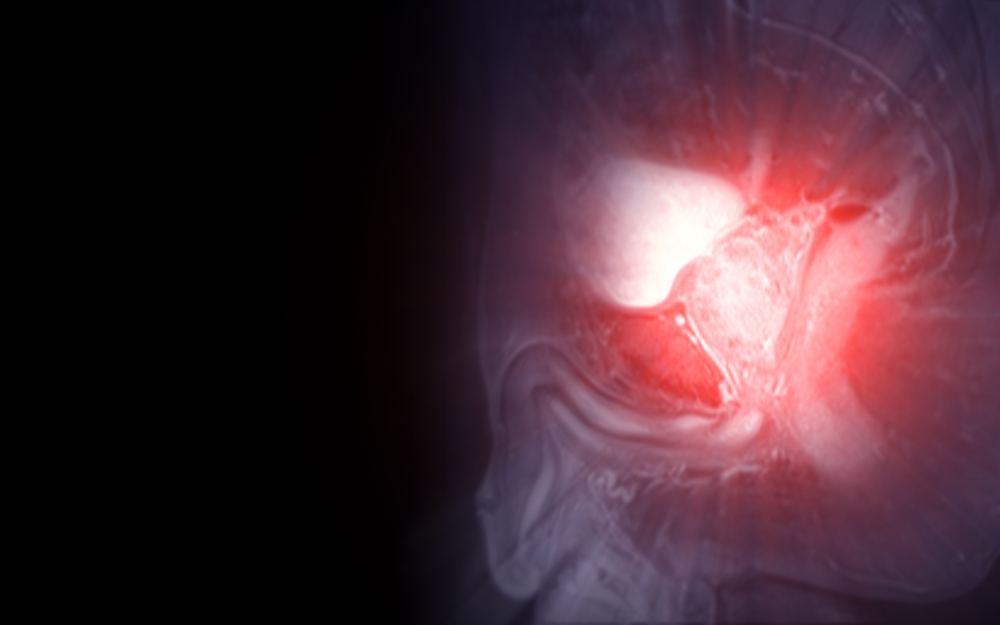
- Visualization: Instead of a text-based report saying “lesion in the peripheral zone,” AI tools produce color-coded heat maps. A doctor can show the patient the screen and say, “This red area is what we are concerned about.”
- Objective Risk: AI provides a risk score (e.g., “85% probability of csPCa”). This number is easier for families to understand than vague terms like “suspicious” or “equivocal.”
For those navigating this journey alongside a loved one, finding clear, reliable information is vital. We have dedicated resources to help you understand the process. Please visit our page For Caregivers for support and guidance.
The Future: Predictive AI
We are currently in the age of diagnostic AI—finding what is there. The next frontier is predictive AI—forecasting what will be there.
Researchers are developing models that combine imaging data with genomics and long-term health records. These future tools won’t just tell us if a man has csPCa today; they will predict which low-grade cancers are destined to mutate into aggressive ones five years from now. This will further refine our ability to offer truly personalized care.
To stay up to date on these rapid advancements, check out our Blogs, Articles & News section regularly.
Integrating AI into Clinical Practice
The adoption of AI in urology and radiology is accelerating. Hospitals that integrate tools like ProstatID™ are positioning themselves as leaders in precision medicine.
For the clinician, the transition involves trusting the data. It requires a shift from relying solely on visual intuition to embracing quantitative assistance. For the patient, it involves asking the right questions: “Is my MRI being read with AI assistance?” “What is the probability score of my lesion?”
Conclusion: A New Standard of Certainty
The battle against prostate cancer is changing. We are moving away from the “shot in the dark” approach of random biopsies and PSA reliance. We are moving toward a future defined by precision, visualization, and data.
AI in csPCa detection is the engine driving this change. By making early prostate cancer diagnosis a reality and ensuring reliable cancer detection regardless of the radiologist’s experience level, AI is doing more than just improving metrics—it is saving lives.
It allows us to catch the killers (csPCa) while sparing the harmless (indolent disease). It turns the MRI scanner from a camera into a microscope. And for the millions of men at risk, it offers the most valuable gift of all: certainty.
Key Takeaways
- Focus on Significance: AI excels at distinguishing between lethal (csPCa) and indolent prostate cancer, reducing overtreatment.
- Beyond the Eye: AI uses quantitative “radiomics” to detect aggressive cancer features that are invisible to human vision.
- Consistency: AI eliminates the variability of human interpretation, providing reliable, standardized results every time.
- Biopsy Guidance: AI-generated maps guide biopsies directly to the most aggressive part of the tumor, improving diagnostic accuracy.
- Gatekeeper Function: High negative predictive value allows men with negative AI-assisted scans to safely avoid unnecessary biopsies.
Frequently Asked Questions
What is Clinically Significant Prostate Cancer (csPCa)?
csPCa refers to prostate cancer that is aggressive and likely to spread or cause death if untreated. It is typically defined as Gleason Score 7 (Grade Group 2) or higher.
How does AI help find csPCa earlier?
AI can detect subtle changes in tissue texture and cellular density associated with malignancy long before a tumor becomes large enough to be visually obvious on a standard MRI scan.
Can AI replace the need for a biopsy?
Not entirely. A biopsy is still the only way to get a definitive tissue diagnosis. However, AI can significantly reduce the number of unnecessary biopsies by accurately identifying who needs one and who doesn’t.
Is AI reliable for all men?
AI models are trained on diverse datasets to ensure reliability across different ages, prostate sizes, and ethnicities. Tools like ProstatID™ are designed to be robust and effective for the general screening population.
Where can I learn more about AI tools?
You can explore the specific features of our AI technology on the ProstatID™ page.
Disclaimer: The content provided in this blog is for informational purposes only and does not constitute medical advice. Always consult with a qualified healthcare provider for diagnosis and treatment options.
Deep Dive: The Science of Significance
To appreciate how AI separates the “tigers” (aggressive cancer) from the “pussycats” (indolent cancer), we need to look at the cellular level.
The ADC Map: A Measure of Chaos
Water molecules in our body are constantly moving (Brownian motion). In healthy prostate tissue, water moves relatively freely. In benign tumors or inflammation, it might be slightly restricted.
In clinically significant cancer, however, the cells proliferate wildly. They become densely packed, squeezing out the extracellular space. This creates a traffic jam for water molecules. On an MRI sequence called the ADC map (Apparent Diffusion Coefficient), this restriction shows up as a low value.
Humans judge “darkness” subjectively. “That looks pretty dark,” a radiologist might say. AI measures the pixel intensity value precisely: “That region has an ADC value of 650.” This quantitative threshold is a powerful predictor of Gleason score. The lower the number, the more aggressive the cancer.
Pattern Recognition in 3D
Prostate cancer isn’t just a 2D spot; it’s a 3D volume. AI algorithms analyze the lesion in three dimensions. They assess the margins—are they smooth (likely benign) or irregular and spiky (likely malignant)?
Aggressive cancers often invade microscopic structures in ways that disrupt the symmetry of the gland. Convolutional Neural Networks (CNNs) are exceptionally good at spotting this asymmetry, even when it is subtle. This 3D analysis is vital for reliable cancer detection because it captures the true biological behavior of the tumor.
Addressing the False Positive Dilemma
One of the biggest criticisms of MRI has been false positives—spots that look like cancer but turn out to be prostatitis (inflammation). This causes anxiety and leads to biopsies that come back benign.
AI in csPCa detection tackles this by looking at “washout kinetics.” This refers to how quickly contrast dye (if used) or blood flows in and out of the tissue.
- Inflammation: Often holds onto blood flow differently than cancer.
- Cancer: Often has “greedy” blood vessels that take up contrast fast and wash it out fast.
By integrating these kinetic patterns with texture analysis, AI reduces the false positive rate significantly compared to visual interpretation alone.
The Patient Journey: A Comparison
Let’s illustrate the difference AI makes with a hypothetical patient, “John.”
Scenario A: Traditional Care
- Screening: John has a slightly elevated PSA (5.5).
- Diagnosis: He gets a standard TRUS biopsy (random sampling). The needles miss a small Gleason 7 tumor in the anterior horn. The biopsy shows only Gleason 6 (indolent).
- Result: John is put on active surveillance. He thinks he is safe.
- Outcome: Two years later, his PSA spikes to 12. A new biopsy finds the Gleason 7 tumor, which has now grown and is threatening the prostate capsule. He requires surgery and radiation.
Scenario B: AI-Assisted Care
- Screening: John has a PSA of 5.5. His doctor orders a bpMRI with ProstatID™ analysis.
- Diagnosis: The radiologist sees a mostly normal prostate, but the AI flags the anterior horn with a high probability of csPCa.
- Action: The urologist performs a targeted fusion biopsy directed specifically at the AI-flagged spot.
- Result: The biopsy catches the small Gleason 7 tumor immediately.
- Outcome: John undergoes focal therapy or surgery while the cancer is still fully contained. He is cured with minimal side effects.
This is the promise of early prostate cancer diagnosis. It changes the timeline. It shifts the intervention from “rescue” to “cure.”
Democratizing Expertise
One of the less discussed but vital aspects of AI is equity. Currently, the quality of a man’s cancer care depends heavily on his zip code. If he lives near a major academic center with fellowship-trained uro-radiologists, he gets world-class diagnostics. If he lives in a rural area, his MRI might be read by a generalist who sees only a few prostates a month.
Reliable cancer detection shouldn’t be a luxury. AI acts as an equalizer. It exports the expertise of the world’s best specialists (whose knowledge is encoded in the algorithm) to every clinic that uses the software. It raises the floor of diagnostic quality, ensuring that every man, regardless of location, has access to expert-level screening.
The Role of Data in Training
The reliability of any AI system depends on its training data. For csPCa detection, this means “ground truth.” You cannot train an AI based on what a radiologist thinks is cancer; you must train it on what a pathologist confirms is cancer.
Leading AI developers use datasets where every MRI image is mapped to a surgical pathology specimen. The AI learns: “This pattern of pixels = Gleason 7 cancer.” This rigorous training process is what gives AI its high specificity for clinically significant disease.
Conclusion
We are at a turning point in men’s health. The tools to defeat prostate cancer—specifically the lethal kind—are in our hands. AI in csPCa detection offers a path to clarity that was previously out of reach.
By identifying significant cancer earlier, distinguishing it from harmless mimics, and providing a reliable safety net for radiologists, AI is rewriting the standard of care.
For patients, this means less anxiety, fewer unnecessary procedures, and a better chance at a long, healthy life. For doctors, it means having a powerful partner in the fight against one of the world’s most common diseases.
The future isn’t just about finding cancer; it’s about finding the cancer that matters. And with AI, we are finding it better than ever before.
Pioneering Cancer Detection with AI and MRI (and CT)
At Bot Image™ AI, we’re on a mission to revolutionize medical imaging through cutting-edge artificial intelligence technology.
Contact Us