


Blog
Cross-Validation, External Validation, and Generalizability in Prostate MRI AI
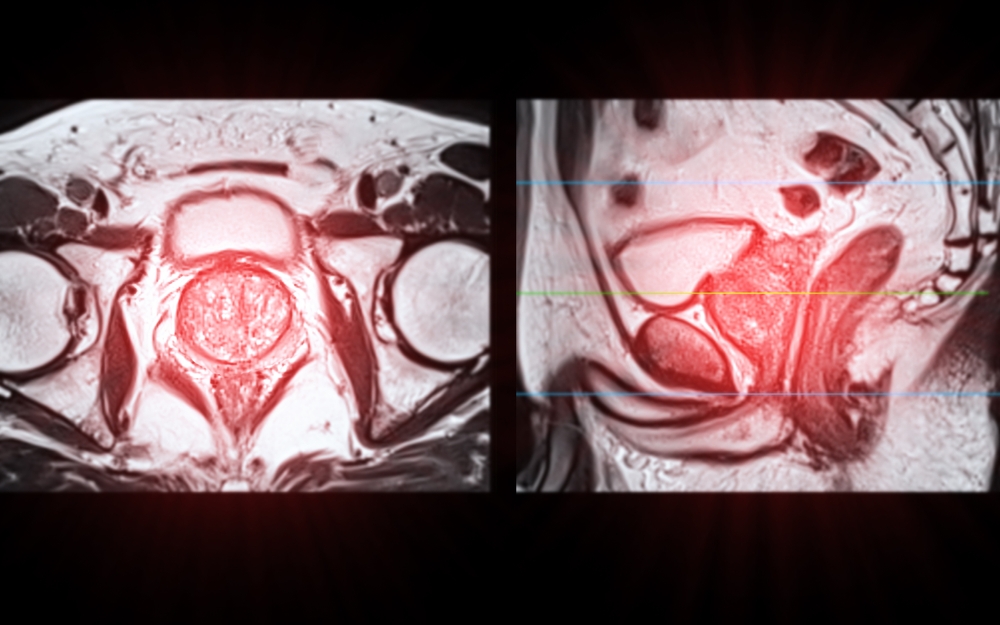
Developing artificial intelligence for prostate MRI isn’t just about training a model that performs well on paper. An algorithm can show impressive results in a lab, but its true value is measured by its performance in the real world. The real challenge is proving that it works consistently across different MRI scanners, hospitals, and patient populations. This process of rigorous testing is what separates a research project from a reliable clinical tool. This post explores how cross-validation, external validation, and generalizability safeguard against common pitfalls and ensure an AI model is ready for real-world clinical use.
Why Validation Matters in Prostate MRI AI
Validation is the structured process of proving an AI model’s accuracy and reliability. Without it, even the most sophisticated algorithm is unusable in a clinical setting. It provides the evidence needed to trust that an AI can deliver consistent results for every patient, every time.
The bridge between research and clinical practice
In the development phase, an AI model learns from a specific set of data. Validation is the bridge that takes this model from its training environment to the complex, unpredictable world of clinical practice. It ensures the AI’s performance isn’t just a fluke tied to its initial dataset but a genuine capability that holds up when analyzing new and unseen patient scans. This step is essential for gaining the confidence of radiologists, urologists, and regulatory bodies.
The problem of overfitting in medical imaging AI
Overfitting is one of the most significant risks in developing medical AI. It occurs when a model learns its training data too well—including the noise and random fluctuations—to the point that it has effectively memorized it. While it may achieve near-perfect scores on that data, it fails when presented with new, unseen cases because it cannot generalize its knowledge. In prostate MRI analysis, where datasets can be small and patient conditions vary widely, overfitting can lead to dangerously inaccurate assessments.
From proof of concept to clinical reliability
An AI model starts as a proof of concept, demonstrating that a specific task—like identifying suspicious lesions on an MRI—is possible. However, possibility is not enough for clinical adoption. Rigorous validation transforms this academic prototype into a trusted tool. It provides the documented proof that the model is robust, accurate, and dependable enough to support physicians in making critical diagnostic and treatment decisions.
Understanding Cross-Validation — Internal Testing for Robustness
Before an AI model faces the outside world, it must first be tested internally. Cross-validation is a powerful technique for assessing a model’s stability and performance by systematically testing it on different subsets of the initial training data. It is a crucial first step in building a trustworthy algorithm.
What cross-validation means in prostate MRI AI
In simple terms, cross-validation involves splitting the available dataset into multiple smaller segments, or “folds.” The model is trained on some of these folds and then tested on the remaining fold that it has not seen. This process is repeated until every fold has been used as a test set. This method is particularly important in medical imaging, where large, diverse datasets can be hard to acquire. It maximizes the utility of the available data, providing a more reliable estimate of the model’s performance than a single train-test split.
Common types of cross-validation
Several methods exist to ensure testing is fair and comprehensive:
- K-fold: The dataset is divided into ‘k’ equal parts. The model trains on k-1 parts and is tested on the one remaining part, repeating the process ‘k’ times.
- Stratified K-fold: This is an enhancement of k-fold where each fold contains roughly the same proportion of class labels (e.g., high-risk vs. low-risk lesions). This prevents a situation where a test fold accidentally contains only one type of case, which would skew the results.
- Leave-one-patient-out: A more granular approach where the model is trained on data from all patients except one, then tested on that single patient’s data. This ensures that information from the same patient never appears in both the training and testing sets simultaneously, which is a critical step in preventing data leakage.
Avoiding data leakage
Data leakage is a subtle but serious error in model validation. It happens when information from the test set inadvertently “leaks” into the training set. For example, if different MRI slices from the same patient scan are placed in both the training and test groups, the model isn’t truly being evaluated on unseen data. Proper dataset splitting, especially at the patient level, is essential to prevent this and ensure the validation results are meaningful.
When internal validation isn’t enough
Strong performance in cross-validation is a great sign. It shows the model is stable and not overfitted to one specific portion of the training data. However, it does not guarantee the model will perform well in a different hospital, on a different scanner, or with a different patient demographic. It only proves the model works well within the confines of its original dataset. True clinical reliability can only be confirmed through external validation.
External Validation — The Gold Standard for AI Reliability
External validation is the ultimate test of an AI model’s real-world readiness. It involves evaluating the model on a completely independent dataset that was not used during training or internal validation. This data should ideally come from different sources to challenge the model’s ability to generalize.
What external validation really tests
This process tests whether the model can handle the natural variations found in clinical practice. The external dataset might come from a different hospital, be acquired with different MRI scanner parameters, or include patients from a different demographic. If the model maintains its accuracy on this new data, it demonstrates true robustness. It proves the AI learned the fundamental patterns of prostate cancer, not just the quirks of a specific scanner or patient cohort.
Why it’s critical in prostate MRI
Every MRI vendor—such as Siemens, GE, and Philips—produces images with subtle differences in contrast, resolution, and noise. A model trained exclusively on images from one vendor may fail when analyzing images from another. External validation using multi-vendor datasets is therefore critical. It ensures the AI is “vendor-agnostic” and can deliver reliable results regardless of the hardware used to acquire the images.
Multi-center validation and generalization
The most rigorous form of external validation uses multi-center, or multi-institutional, datasets. By testing the model on data from several different hospitals or imaging centers, developers can prove its ability to generalize across variations in scanning protocols, technician habits, and patient diversity. This is the highest level of evidence that an AI model is robust and ready for broad clinical deployment.
External validation as a regulatory requirement
Regulatory bodies like the U.S. Food and Drug Administration (FDA) and European authorities (CE marking) have clear expectations for AI medical devices. They require strong evidence that a model’s performance is consistent and reliable across diverse clinical environments. Substantial external validation data is no longer a “nice-to-have”; it is a prerequisite for regulatory clearance and market approval.
Overfitting — The Hidden Risk in AI Model Development
Overfitting is the silent enemy of AI model development. It creates a model that looks brilliant in the lab but is useless in practice. Understanding how to identify and prevent it is a core competency for any team building clinical-grade AI.
What overfitting looks like in prostate MRI AI
An overfitted model is like a student who memorizes the answers to a practice test but doesn’t understand the underlying concepts. When presented with the exact same questions, they get a perfect score. But when given a new test with slightly different questions, they fail completely. In prostate MRI AI, this translates to a model that shows near-perfect accuracy on its training data but has a dramatic drop in performance when tested on any new dataset.
Causes of overfitting in imaging AI
Several factors can contribute to overfitting, especially in medical imaging:
- Limited dataset size: When there isn’t enough data, the model may start learning irrelevant details instead of the true underlying patterns.
- Redundant or noisy features: If the input data contains a lot of noise or irrelevant information, the model might mistakenly learn to associate this noise with the outcome.
- Overly complex architectures: A model with too many parameters or layers can easily memorize the training data rather than learning to generalize from it.
How to detect overfitting early
One of the most effective ways to spot overfitting is to monitor the model’s performance on both the training data and a separate validation set during the training process. If the training accuracy continues to improve while the validation accuracy stagnates or starts to decline, it’s a clear sign of overfitting. This gap between the training and validation performance curves indicates the model is no longer learning generalizable patterns.
Strategies to prevent overfitting
Fortunately, developers have several powerful techniques to combat overfitting:
- Dropout: Randomly “dropping out” or ignoring a fraction of neurons during each training step forces the model to learn more robust features.
- Regularization: This technique adds a penalty to the model for having overly complex or large parameters, encouraging it to find simpler, more generalizable solutions.
- Early stopping: This involves stopping the training process as soon as the model’s performance on the validation set stops improving, preventing it from starting to overfit.
- Cross-validation: As discussed earlier, this method provides a more accurate estimate of the model’s generalization ability and helps ensure it isn’t tuned to a single, specific data split.
Generalizability — Ensuring AI Works Everywhere
Generalizability is the ultimate goal of AI model development. It is the model’s proven ability to maintain its accuracy and reliability across the full spectrum of real-world clinical scenarios, including new scanners, sites, and patient populations it has never encountered before.
What generalizability means in medical AI
A generalizable model is one that can be deployed in a hospital in another state or country and perform just as well as it did in its development environment. It means the model has truly learned the fundamental biological and imaging signatures of disease, untangled from the specific technical artifacts of any single dataset. This quality is what makes an AI tool universally valuable.
Measuring generalization performance
Generalizability is measured by evaluating a model on datasets from completely unseen domains. This could mean testing a model trained in North America on data from Europe or Asia, or testing a model trained on 3T MRI scanners with data from 1.5T scanners. The smaller the drop in performance on these new domains, the better the model’s generalizability.
Why generalizability drives clinical adoption
Clinicians and regulators must have absolute trust that an AI tool will perform reliably for every patient, regardless of where they get their scan. If a model’s accuracy is unpredictable, it cannot be integrated into clinical workflows. Strong evidence of generalizability is the foundation of this trust. It assures stakeholders that the technology is not a fragile laboratory experiment but a robust, dependable tool that improves patient care everywhere.
Common Validation Frameworks in Prostate MRI Research
To ensure rigor and consistency, the research community has developed several established frameworks for validating AI models.
Internal-external cross-validation (nested validation)
This hybrid approach, also known as nested validation, provides a highly robust way to tune a model’s hyperparameters (its internal settings) without causing data leakage. It uses an outer loop for testing and an inner loop for tuning, ensuring that the final performance evaluation is always done on data that was completely held out from the tuning process.
Prospective validation and clinical trials
The highest level of evidence comes from prospective validation. Unlike retrospective studies that use historical data, a prospective study evaluates the AI model in real-time as new patients come through the clinic. This demonstrates how the AI performs within an actual clinical workflow. Formal clinical trials are a type of prospective study designed to provide definitive evidence of a device’s safety and effectiveness for regulatory approval.
Reproducibility standards and data-sharing initiatives
Reproducibility is a cornerstone of good science. Initiatives like The Cancer Imaging Archive (TCIA) provide public access to large, curated medical imaging datasets, allowing researchers to validate their models on standardized data. At the same time, the Image Biomarker Standardization Initiative (IBSI) works to standardize the calculation of radiomic features, ensuring that results are comparable across different studies and software tools.
Reporting Best Practices for Validation Studies
For an AI validation study to be credible, its methods and results must be reported transparently and rigorously.
Transparent reporting of datasets and splits
Researchers should clearly disclose the details of their datasets, including the number of patients, the types of MRI scanners and field strengths used, and the exact strategy for splitting data into training, validation, and test sets. This transparency allows others to assess the quality of the validation and reproduce the results.
Confidence intervals and statistical rigor
Performance metrics like sensitivity or AUC should never be reported as single numbers. They should always be accompanied by 95% confidence intervals. This range provides a more honest picture of the model’s likely performance and reflects the statistical uncertainty inherent in testing on a limited sample of data.
Following reporting guidelines
To promote standardization and reproducibility, several reporting guidelines have been developed for AI research. Checklists like CLAIM (Checklist for Artificial Intelligence in Medical Imaging) and CONSORT-AI (an extension for clinical trials involving AI) help ensure that publications include all the necessary information for readers to critically appraise the study’s validity.
Conclusion
Building a trustworthy AI for prostate cancer imaging requires more than just a powerful algorithm. It demands a relentless commitment to validation at every stage. Cross-validation builds internal robustness, external validation proves real-world performance, and a focus on generalizability ensures the AI is a tool that clinicians everywhere can trust.
Without all three, even the most promising prostate MRI AI models remain research curiosities rather than clinically deployable tools that can make a real difference in patients’ lives. By rigorously validating models against overfitting and across diverse domains, developers can build truly reliable, regulatory-ready AI solutions that advance the standard of care in prostate cancer imaging.
Pioneering Cancer Detection with AI and MRI (and CT)
At Bot Image™ AI, we’re on a mission to revolutionize medical imaging through cutting-edge artificial intelligence technology.
Contact Us