


Blog
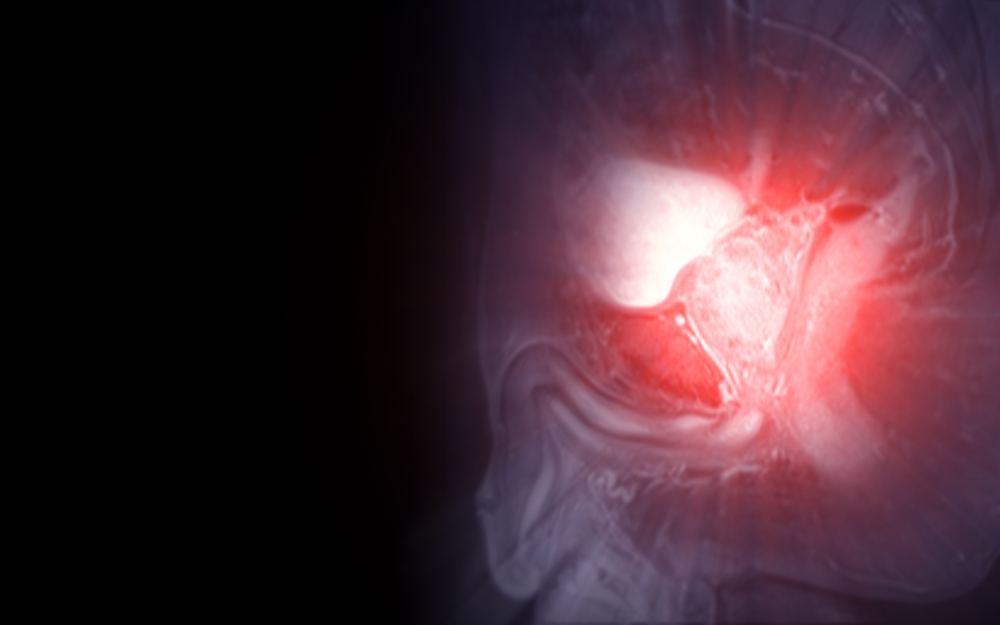
Deep learning has transformed prostate MRI analysis by automating lesion detection, segmentation, and classification. These AI models, built on Convolutional Neural Networks (CNNs) and transformer architectures, can extract high-level spatial and contextual features from MRI data that outperform traditional methods. The goal is to improve diagnostic accuracy, consistency, and workflow efficiency for better patient outcomes.
Understanding Deep Learning in Prostate MRI
Deep learning represents a significant leap forward in how computers interpret medical images. Unlike earlier methods that required manual guidance, these advanced models learn directly from data, uncovering patterns that are often invisible to the human eye. This capability is fundamentally changing prostate cancer diagnostics.
From traditional AI to deep neural networks
Before deep learning became widespread, artificial intelligence in medical imaging relied on classical machine learning (ML) models. These algorithms, such as Support Vector Machines (SVM), Random Forest, and XGBoost, required a process called manual feature extraction. Radiologists and data scientists would first identify and quantify specific image characteristics—like lesion size, texture, and intensity—and then feed these handcrafted features into the model.
While effective to a degree, this approach was time-consuming and limited by the features chosen. Deep learning, powered by deep neural networks, automates this process. These networks, with their many layers, learn relevant features directly from the raw pixel data of MRI scans, creating a more robust and objective analysis.
Why deep learning works well for medical imaging
Deep learning, particularly Convolutional Neural Networks (CNNs), is exceptionally well-suited for medical imaging. CNNs are designed to process data in a grid-like topology, such as an image. They automatically learn a hierarchy of features, starting with simple elements like edges and colors in the initial layers. As data passes through deeper layers, the network combines these simple features to recognize more complex structures, like textures and shapes.
For prostate MRI, this means a CNN can learn to identify the subtle textural and morphological differences that distinguish cancerous lesions from healthy tissue or benign conditions like benign prostatic hyperplasia (BPH). This automated feature learning removes subjective variability and helps create a more standardized, data-driven diagnostic process.
The role of labeled data and annotations
The power of deep learning is unlocked by high-quality, labeled data. For a model to learn how to detect prostate cancer, it must be trained on thousands of MRI scans where experienced radiologists have already identified and outlined suspicious areas. This process is called annotation.
The “ground truth” for these annotations is ideally confirmed by biopsy results, which verify whether a suspicious area is cancerous. The accuracy and generalizability of a deep learning model are directly tied to the quality and quantity of this annotated data. Large, diverse datasets from multiple institutions and scanner types are essential for building AI tools that perform reliably in real-world clinical settings.
Core Deep Learning Architectures for Prostate Lesion Classification
Several deep learning architectures have proven effective for analyzing prostate MRI. Each type offers unique strengths, from identifying local patterns to understanding the broader context of an entire image.
Convolutional Neural Networks (CNNs)
CNNs are the workhorse of modern medical image analysis. They use a series of filters (or kernels) that slide across MRI slices to detect specific features. By stacking multiple layers of these filters, a CNN can build a rich, hierarchical understanding of the image content, making it highly effective at identifying lesion patterns.
Popular architectures like ResNet and DenseNet excel at classification tasks. For segmentation—the precise outlining of a lesion’s boundaries—the U-Net architecture is a common choice. A key consideration is whether to use a 2D or 3D CNN. While 2D CNNs analyze each MRI slice individually, 3D CNNs process the entire volumetric prostate scan, allowing them to capture spatial relationships between slices for a more comprehensive analysis.
Transformer-based models in medical imaging
Originally developed for natural language processing, transformer-based models have recently been adapted for computer vision, creating what are known as vision transformers (ViT). Instead of processing pixels with sliding filters like CNNs, transformers use a mechanism called “self-attention.” This allows the model to weigh the importance of different parts of an image simultaneously, enabling it to understand long-range spatial relationships.
In prostate MRI, this means a transformer can connect information from distant regions of the prostate gland to make a more informed classification. Emerging frameworks like the Swin Transformer and TransUNet (a hybrid model) are showing great promise in medical imaging by improving upon the original ViT architecture for better performance and efficiency.
Hybrid CNN-transformer architectures
The most advanced models often combine the best of both worlds. Hybrid architectures use CNNs for their strength in local feature extraction—identifying fine-grained textures and edges within a lesion. They then feed these features into a transformer, which uses its self-attention mechanism to analyze the global context and relationships between these features across the entire prostate. This powerful combination often leads to superior performance in complex lesion classification tasks.
Deep Learning Workflow in Prostate MRI
Developing a reliable deep learning model for clinical use involves a rigorous, multi-stage workflow. Each step is critical for ensuring the final AI tool is accurate, safe, and effective.
Data preprocessing and normalization
MRI scans vary significantly depending on the scanner manufacturer, field strength, and imaging protocol. To ensure a deep learning model learns true biological patterns instead of scanner-specific noise, a preprocessing step is essential. This typically involves:
- Intensity Normalization: Standardizing the pixel intensity values across all scans.
- Bias Field Correction: Removing low-frequency signal variations caused by MRI hardware.
- Data Augmentation: Artificially expanding the dataset by creating modified copies of existing images (e.g., rotating, flipping, or scaling them) to help the model generalize better.
Training, validation, and test splits
To build and evaluate a model properly, the dataset is split into three parts. The training set is the largest portion and is used to teach the model. The validation set is used to tune the model’s parameters and prevent it from “memorizing” the training data. Finally, the test set is a completely unseen portion of the data used for the final performance evaluation.
Techniques like k-fold cross-validation are often used to ensure the model’s performance is robust and not dependent on a specific data split. This process is crucial for establishing the model’s generalizability.
Labeling and ground truth creation
The foundation of a trustworthy AI model is accurate ground truth. In prostate MRI, this means having expert radiologists meticulously annotate lesions on the scans. To reduce “label noise” or inter-reader variability, annotations are often created through a consensus of multiple experts. Most importantly, these labels are ideally correlated with biopsy results, providing a definitive biological basis for what the model is learning to identify.
Performance Evaluation of Deep Learning Models
Measuring how well a deep learning model performs requires specific metrics and evaluation strategies that reflect its intended clinical use.
Common metrics for lesion classification
Several key metrics are used to quantify a model’s accuracy:
- Sensitivity: The model’s ability to correctly identify patients with cancer (true positive rate).
- Specificity: The model’s ability to correctly identify patients without cancer (true negative rate).
- Area Under the Curve (AUC): A comprehensive measure of the model’s overall diagnostic ability across all thresholds. An AUC of 1.0 represents a perfect model.
- F1-Score: The harmonic mean of precision and recall, providing a balanced measure of performance, especially on imbalanced datasets.
Per-lesion vs per-patient evaluation
Evaluation can be done at two levels. Per-lesion evaluation assesses the model’s ability to correctly classify each individual suspicious area within the prostate. Per-patient evaluation determines the model’s accuracy in making an overall diagnosis for the patient—for example, identifying whether clinically significant prostate cancer is present anywhere in the gland. Both are important for understanding the model’s clinical utility.
Benchmarking deep learning against radiologists
A growing number of studies compare the performance of deep learning models to that of human readers. Many of these studies show that AI models, particularly advanced CNN and transformer-based systems, can achieve a diagnostic accuracy on par with or even exceeding that of experienced radiologists. More importantly, when used as an assistive tool, AI can help improve inter-reader agreement and boost the confidence and performance of radiologists with varying levels of experience.
Strengths of Deep Learning for Prostate MRI
Deep learning models offer several powerful advantages that address key challenges in prostate cancer diagnostics and management.
Automated lesion detection and segmentation
One of the most immediate benefits of deep learning is automation. AI models can automatically scan an entire prostate MRI study, detect suspicious lesions, and precisely outline their boundaries. This “zero-click” approach significantly reduces the time radiologists spend on manual interpretation and segmentation, freeing them to focus on complex cases and treatment planning. This automation also improves consistency, as the AI applies the same criteria to every scan.
Integration with radiomic and clinical data
The features learned by a deep learning model can be incredibly powerful on their own, but they become even more valuable when combined with other data sources. These “deep features” can be fused with handcrafted radiomic features and other clinical data, such as a patient’s PSA level and age. These comprehensive models provide a more holistic view of the patient’s disease state.
Scalability and continuous learning
Deep learning models are highly scalable. Once trained, they can be deployed across large healthcare networks to analyze thousands of scans with consistent quality. Furthermore, these models can be continuously improved. As more data becomes available, models can be retrained and updated to enhance their accuracy and expand their capabilities, a process known as continuous learning.
Challenges and Limitations of Deep Learning in MRI
Despite its immense potential, deploying deep learning in clinical practice comes with several challenges that the field is actively working to overcome.
Data scarcity and annotation cost
The biggest bottleneck in developing medical AI is the availability of large, high-quality, and properly annotated datasets. Creating these datasets is a costly and labor-intensive process, requiring hours of work from expert radiologists. Biopsy-confirmed data is even more scarce, limiting the scale of many research studies.
Domain shift across scanners and protocols
A model trained on data from one hospital’s scanners may not perform as well when used on images from a different hospital with different equipment or imaging protocols. This problem, known as “domain shift,” is a major hurdle for widespread AI adoption. Addressing it requires robust data normalization techniques and specialized training methods.
Interpretability and clinical trust
Many deep learning models operate as “black boxes,” meaning it is not always clear how they arrive at a decision. This lack of transparency can be a barrier to clinical trust. To address this, researchers are developing explainable AI (XAI) techniques that provide visual cues, like heatmaps, to show which parts of an image the model focused on.
Emerging Techniques in Deep Learning for Prostate MRI
The field of AI is evolving rapidly, with new techniques constantly emerging to address the challenges of data scarcity, domain shift, and privacy.
Transfer learning and fine-tuning
Transfer learning is a powerful technique where a model pre-trained on a massive dataset of general images (like photographs from the internet) is adapted for a specific medical task. By fine-tuning this pre-trained model on a smaller dataset of prostate MRIs, developers can achieve high accuracy with much less labeled data.
Self-supervised and weakly supervised learning
To reduce the reliance on meticulously annotated data, researchers are exploring new learning paradigms. Self-supervised learning allows a model to learn useful features from large amounts of unlabeled data by solving pretext tasks, such as predicting a missing part of an image. Weakly supervised learning uses less precise labels, such as a report indicating only whether cancer is present in the patient, to train a model, further reducing the annotation burden.
Federated and privacy-preserving learning
Sharing patient data between hospitals for AI training raises significant privacy concerns. Federated learning offers a solution. In this approach, a central model is sent to each hospital, where it is trained locally on their private data. Only the model updates—not the data itself—are sent back to be aggregated. This allows for collaborative model training without compromising patient privacy.
Clinical Implementation of Deep Learning in Prostate Imaging
The ultimate goal of deep learning research is to integrate these powerful tools into daily clinical workflows to improve patient care.
AI-assisted radiology workflows
In practice, AI serves as a powerful assistant for radiologists. Deep learning models can pre-process MRI studies, automatically flagging suspicious lesions for review or providing an initial PI-RADS score. This acts as a “second read,” helping radiologists detect subtle lesions they might have otherwise missed and improving their diagnostic confidence.
Integration into PACS and reporting systems
For AI to be truly useful, it must be seamlessly integrated into existing systems. Modern AI platforms, like Bot Image’s ProstatID™, are designed to work directly with a hospital’s Picture Archiving and Communication System (PACS). The AI automatically processes the MRI scan and sends the results—often a colorized overlay on the original images and a structured report—back to the PACS. This “zero-click” workflow requires no extra steps from the radiologist.
FDA-cleared prostate MRI AI tools
Regulatory clearance is a critical milestone that validates an AI tool’s safety and effectiveness for clinical use. A growing number of AI solutions for prostate MRI have achieved FDA clearance, demonstrating that they meet rigorous standards for performance and reliability. Tools like ProstatID™ represent the successful transition of deep learning from a research concept to a clinically validated product that is helping physicians and patients today.
Conclusion
Deep learning models like Convolutional Neural Networks (CNNs) and transformers are revolutionizing prostate MRI. They offer unprecedented potential for accuracy, automation, and efficiency in lesion classification. By automatically detecting and characterizing suspicious lesions, these AI tools help radiologists make more confident and consistent diagnoses.
The combination of powerful deep learning features, emerging techniques to overcome data limitations, and a focus on explainability is paving the way for scalable, trustworthy clinical AI. As these technologies become more integrated into routine workflows, they promise to elevate the standard of care in the fight against prostate cancer.
Pioneering Cancer Detection with AI and MRI (and CT)
At Bot Image™ AI, we’re on a mission to revolutionize medical imaging through cutting-edge artificial intelligence technology.
Contact Us