

Blog
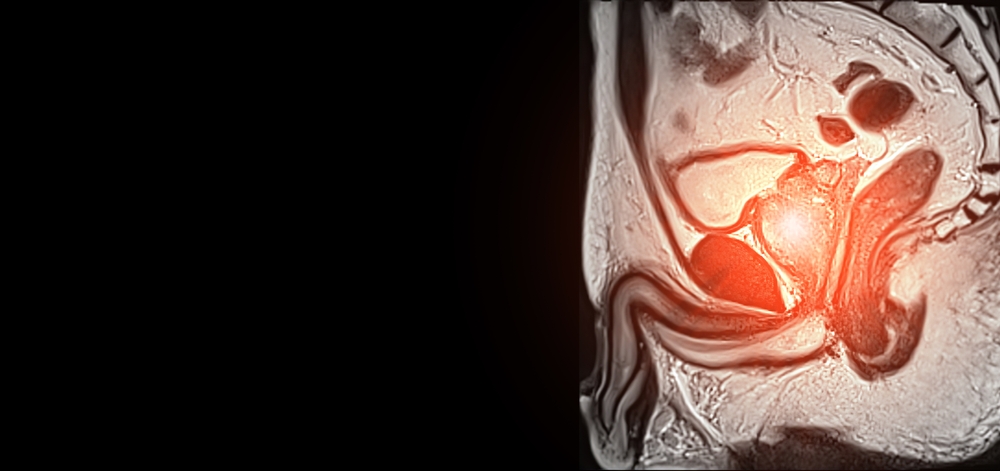
Prostate cancer is one of the most common cancers affecting men, but early detection dramatically improves outcomes. For decades, clinicians have relied on various imaging techniques to identify and characterize suspicious areas within the prostate gland. Magnetic Resonance Imaging (MRI) has emerged as a powerful, noninvasive tool that allows for detailed visualization, helping physicians spot potential lesions and determine their likelihood of being clinically significant. As this technology has advanced, so too have the methods for interpreting these complex images. The introduction of artificial intelligence (AI) is now revolutionizing the field, offering unprecedented accuracy, speed, and workflow efficiency. This guide explains how prostate MRI, radiomics, and AI models are transforming prostate cancer lesion classification — from image acquisition to clinical decision-making.
Understanding Prostate Cancer and the Role of MRI
Understanding the fundamentals of prostate cancer and the imaging technology used to diagnose it is the first step toward appreciating the advancements in lesion classification. Early and accurate diagnosis is the cornerstone of effective treatment planning.
What is prostate cancer and why early detection matters
Prostate cancer develops when cells in the prostate gland—a small gland located below the bladder in men—begin to grow out of control. Some prostate cancers grow very slowly and may not cause significant harm, while others can be aggressive, spreading quickly to other parts of the body.
Early detection is critical. When found before it has spread outside the prostate, the five-year survival rate is nearly 100%. Catching the disease in its initial stages gives patients and their doctors more treatment options, including active surveillance for low-risk cancers, which avoids the side effects of more aggressive therapies. This makes precise, early-stage prostate MRI detection an invaluable part of modern urological care.
Why MRI is the imaging method of choice for prostate cancer
While other tests like the prostate-specific antigen (PSA) blood test and digital rectal exam (DRE) are used for screening, MRI has become the gold standard for visualizing and characterizing suspicious areas. Specifically, multi-parametric MRI (mpMRI) provides exceptional soft-tissue contrast, offering a detailed view of the prostate’s anatomy and any abnormalities within it.
The power of mpMRI prostate cancer analysis lies in its noninvasive nature. It combines different MRI sequences to provide both anatomical and functional information about the tissue. This allows radiologists to not only see a potential lesion but also to assess its biological characteristics, such as cell density and blood flow. This detailed prostate lesion visualization helps distinguish between benign conditions like benign prostatic hyperplasia (BPH) and potentially aggressive cancer, guiding the need for a biopsy with greater confidence.
Core MRI Sequences for Prostate Lesion Characterization
A comprehensive prostate MRI exam is not just one scan but a collection of different imaging sequences. Each sequence provides a unique piece of the diagnostic puzzle, and together, they create a detailed picture of the prostate gland.
T2-weighted imaging (T2WI): structural anatomy and lesion visibility
T2-weighted imaging is the workhorse of prostate MRI. It provides high-resolution anatomical images, clearly outlining the prostate gland and its internal zones. Healthy peripheral zone tissue appears bright on T2WI, whereas most prostate cancers appear as dark, ill-defined areas. This contrast makes T2WI fundamental for identifying and localizing suspicious lesions.
Diffusion-weighted imaging (DWI) and Apparent Diffusion Coefficient (ADC) mapping
DWI measures the random motion of water molecules within tissue. In cancerous tissue, cells are more densely packed, which restricts water movement. This restriction appears as bright spots on DWI scans and, more importantly, as dark spots on the corresponding Apparent Diffusion Coefficient (ADC) map. A low ADC value is a strong indicator of malignancy and correlates with higher-grade tumors.
Dynamic contrast-enhanced (DCE) MRI and contrast kinetics
DCE MRI involves injecting a gadolinium-based contrast agent into the bloodstream and capturing images over time to observe how it flows into and out of the prostate tissue. Cancerous tumors tend to develop new blood vessels that are leaky, causing the contrast agent to wash in and out more rapidly than in healthy tissue. Analyzing these contrast kinetics helps radiologists assess a lesion’s vascularity, adding another layer of functional information to the diagnosis.
MR spectroscopy and emerging functional techniques
While less commonly used in routine clinical practice, MR spectroscopy (MRS) can provide metabolic information about prostate tissue. It measures the levels of certain chemicals, like choline and citrate. An elevated choline-to-citrate ratio can be indicative of cancer. Other emerging techniques are continuously being researched to further enhance the functional assessment of prostate lesions and improve diagnostic accuracy.
From Scan to Diagnosis — The Prostate MRI Workflow
Getting from a raw MRI scan to a confident diagnosis involves a multi-step process that requires precision, expertise, and increasingly, the support of intelligent technology. This workflow ensures that images are high quality and interpretations are standardized and actionable.
Image acquisition and quality control
The diagnostic journey begins at the MRI scanner. Technologists must perform specific imaging protocols to acquire high-quality T2WI, DWI, and DCE sequences. Consistency is key. Even minor variations in scanner settings or patient movement can affect image quality, potentially obscuring a small lesion or mimicking disease. Robust quality control checks are essential to ensure the images are clear and diagnostically useful.
Lesion detection, segmentation, and reporting standards (PI-RADS, Gleason correlation)
Once the images are acquired, a radiologist examines them to detect suspicious areas. When a potential lesion is found, it is “segmented”—its boundaries are outlined on the images. To standardize reporting, radiologists use the Prostate Imaging Reporting and Data System (PI-RADS). This system assigns a score from 1 (highly unlikely to be clinically significant cancer) to 5 (highly likely to be clinically significant cancer) based on the lesion’s appearance across the different MRI sequences.
This PI-RADS score helps urologists decide whether to perform a biopsy. If a biopsy is done, the tissue is examined by a pathologist, who assigns a Gleason score to grade the cancer’s aggressiveness. A key goal of modern imaging is to improve the correlation between a lesion’s PI-RADS score and its final Gleason score.
Integrating AI into clinical reading and decision support
The interpretation of prostate MRI is complex and time-consuming, with variability between readers. This is where AI comes in. AI-assisted prostate MRI software can automate lesion detection and segmentation, saving radiologists valuable time. More importantly, AI algorithms trained on thousands of biopsy-verified cases can provide an objective risk score for each lesion, improving diagnostic accuracy and consistency.
Seamless PACS integration allows this AI-generated data to appear directly within the radiologist’s existing viewing software, requiring no extra steps. This radiologist workflow automation provides powerful decision support, helping clinicians identify suspicious lesions with greater confidence and efficiency.
Common Challenges and Pitfalls in Prostate MRI
Despite its power, prostate MRI is not without its challenges. Technical limitations and biological complexities can make interpretation difficult, but awareness of these issues is the first step toward overcoming them.
Small or low-contrast lesions
Some cancerous lesions are very small or have imaging characteristics that are very similar to surrounding healthy or benign tissue. This low contrast can make them difficult to spot with the naked eye, leading to potential missed diagnoses. AI models, capable of detecting subtle patterns in pixel data, can be particularly helpful in highlighting these otherwise inconspicuous lesions.
Motion artifacts and image distortion
Patient movement during the scan can cause blurring or ghosting artifacts, which can degrade image quality and make interpretation unreliable. Other factors, such as the presence of gas in the rectum or metallic hip implants, can cause geometric distortion in the images. Advanced MRI artifact correction methods are crucial for mitigating these issues and ensuring diagnostic clarity.
Domain shift across MRI scanners and protocols
MRI scanners from different manufacturers, or even different models from the same manufacturer, produce images with slight variations. This “domain shift” can pose a significant challenge for AI models, as an algorithm trained on data from one type of scanner may not perform as well on images from another. Developing robust algorithms that are vendor-agnostic is a key goal in AI development. Domain shift and harmonization in prostate MRI are active areas of research to ensure AI tools are generalizable across different clinical settings.
Classification Approaches — From Radiomics to Deep Learning
The methods used to classify prostate lesions have evolved from manual interpretation to sophisticated computational models. These approaches extract vast amounts of quantitative data from images to provide objective and reproducible assessments.
Radiomic feature extraction and analysis
Radiomics involves converting medical images into high-dimensional data by extracting a large number of quantitative features. These features describe a lesion’s shape, size, intensity, and texture in a way that goes far beyond what the human eye can perceive. By analyzing these features, radiomic models can identify patterns that correlate with a lesion’s underlying biology, such as its likelihood of being cancerous.
Classical machine learning models (SVM, random forest, XGBoost)
Once radiomic features are extracted, classical machine learning models can be used to build a classifier. Algorithms like Support Vector Machines (SVM), Random Forest, and XGBoost are trained on datasets where the true diagnosis (benign or cancerous) is known. The model learns the relationships between the radiomic features and the diagnosis, creating a predictive tool that can classify new, unseen lesions.
Deep learning models (CNNs, transformers, hybrid architectures)
Deep learning represents a major leap forward. Unlike classical machine learning, deep learning models, particularly Convolutional Neural Networks (CNNs), can learn relevant features directly from the raw image data without manual feature extraction. This allows them to uncover incredibly complex and subtle patterns. More advanced architectures, like transformers and hybrid models, are pushing the boundaries of performance even further, achieving state-of-the-art results in lesion classification.
Multi-modal approaches: MRI plus clinical data fusion
The most powerful models often combine information from multiple sources. A multi-modal approach might fuse MRI data with other clinical information, such as a patient’s PSA level, age, and genetic markers. By integrating all available data, these models can create a more holistic and accurate prediction of a lesion’s risk.
Validation, Metrics, and Clinical Translation
An AI model is only useful if it is proven to be safe, effective, and reliable in a real-world clinical setting. This requires rigorous validation and a clear pathway from research to regulatory approval.
Evaluating model performance (AUC, sensitivity, specificity)
The performance of a classification model is measured using several key metrics. The Area Under the Curve (AUC) is a common metric that summarizes the model’s overall ability to distinguish between classes. Sensitivity measures how well the model identifies true positives (correctly identifying cancer), while specificity measures its ability to identify true negatives (correctly ruling out cancer). Strong clinical performance metrics are essential for demonstrating a model’s value.
External validation and generalizability challenges
A model that performs well on the data it was trained on may not perform as well on new data from a different hospital or scanner. This is why external validation is critical. Testing a model on completely independent datasets from diverse sources is the only way to prove its generalizability and ensure it will be reliable in widespread clinical use. The AI validation prostate MRI process is a crucial step for any tool seeking clinical adoption.
Clinical trials and regulatory pathways for MRI-based AI tools
Before an AI tool can be used in patient care, it must undergo extensive testing in clinical trials to demonstrate its safety and effectiveness. The results of these trials are then submitted to regulatory bodies like the U.S. Food and Drug Administration (FDA) for review. Achieving regulatory clearance is a major milestone, signifying that the tool has met high standards for performance and quality. The availability of FDA-cleared prostate AI software provides clinicians with confidence that they are using a validated, trustworthy technology.
Future Directions in MRI-Based Lesion Classification
The field of AI-assisted prostate MRI is advancing rapidly, with researchers focused on making models more trustworthy, data-efficient, and privacy-conscious.
Explainability and trust in AI models
One of the criticisms of some deep learning models is that they operate like “black boxes,” making it difficult to understand why they made a particular prediction. Researchers are developing methods for “explainable AI” (XAI) that provide insights into the model’s decision-making process, such as highlighting the specific image regions it found most important. Building explainability and trust is key to fostering widespread clinical adoption.
Federated learning and privacy-preserving model training
Training robust AI models requires large, diverse datasets. However, sharing patient data between institutions raises significant privacy concerns. Federated learning is an innovative approach where the model is trained locally at each institution without the raw data ever leaving the hospital’s firewall. Only the model updates are shared, allowing for collaborative training while preserving patient privacy.
Self-supervised and weakly-supervised learning in prostate MRI
Labeling medical images for training AI requires significant time and expert effort. Self-supervised and weakly-supervised learning are emerging techniques that allow models to learn from large amounts of unlabeled or partially labeled data. This can dramatically reduce the annotation burden and enable the use of much larger datasets, leading to more robust and accurate models.
Conclusion — Where the Field Is Heading
The classification of prostate cancer lesions using MRI has evolved from a subjective art into a data-driven science. The integration of advanced imaging sequences, standardized reporting, and powerful AI algorithms is setting a new standard for diagnostic care. The promise of AI is clear: to equip clinicians with tools that enhance their expertise, streamline their workflows, and ultimately improve patient outcomes.
Solutions like Bot Image’s ProstatID™ and the patient-facing MaleScan™ service are at the forefront of this transformation. By delivering rapid, accurate, and objective analysis directly into the clinical workflow, these technologies are leading the way toward a future where prostate cancer diagnosis is faster, more precise, and more reliable than ever before.
Pioneering Cancer Detection with AI and MRI (and CT)
At Bot Image™ AI, we’re on a mission to revolutionize medical imaging through cutting-edge artificial intelligence technology.
Contact Us