
Blog
Automating Prostate MRI Interpretation: What Radiologists Gain from AI Assistance
Radiology is at a tipping point. The demand for diagnostic imaging is skyrocketing, driven by an aging population and a growing emphasis on early detection. Yet, the supply of radiologists is struggling to keep pace. Nowhere is this tension more palpable than in the interpretation of prostate MRI.
Prostate cancer remains one of the most common cancers in men, and multiparametric MRI (mpMRI) has become the gold standard for detection and staging. However, interpreting these scans is notoriously complex. It requires a radiologist to synthesize vast amounts of data, navigate subtle anatomical variances, and distinguish between benign mimics and genuine malignancy. It is a high-stakes cognitive endurance test that, until recently, had to be performed entirely manually.
But the landscape is shifting. AI in radiology is no longer a futuristic concept—it is a practical reality delivering tangible benefits today. Tools like ProstatID™ are automating the most tedious aspects of interpretation, offering a powerful ally in the reading room.
In this deep dive, we will explore the specific challenges of prostate MRI interpretation and unpack exactly what radiologists stand to gain from integrating AI assistance into their daily workflow. From reducing reader variability to alleviating burnout, the benefits of automation are transforming the profession for the better.
The Unique Challenge of Prostate MRI Interpretation
To appreciate the value of automation, we must first understand the problem. Prostate MRI is unlike a simple bone X-ray or a CT of the head. It is a multi-dimensional puzzle that presents unique hurdles even for seasoned subspecialists.
The Complexity of Anatomy and Pathology
The prostate gland is small, but its internal architecture is complex. It is divided into zones—peripheral, transition, central—each with different imaging characteristics. Radiologists must evaluate these zones across multiple sequences (T2-weighted, Diffusion-Weighted Imaging, Apparent Diffusion Coefficient maps, and sometimes Dynamic Contrast Enhancement).
The challenge is compounded by the fact that the prostate is rarely “quiet.” It is frequently beset by benign conditions that mimic cancer.
- Benign Prostatic Hyperplasia (BPH): Nodules in the transition zone can look strikingly similar to tumors.
- Prostatitis: Inflammation can cause restricted diffusion, a key marker of malignancy, leading to false positives.
- Post-Biopsy Changes: Hemorrhage from previous procedures can obscure or mimic lesions.
Navigating this “noise” requires intense concentration. A radiologist must mentally co-register these different sequences, filtering out the benign distractors to find the needle in the haystack.
The Subjectivity Problem (Inter-Reader Variability)
Because of this complexity, prostate MRI interpretation is inherently subjective. The PI-RADS (Prostate Imaging Reporting and Data System) was developed to standardize reporting, but it hasn’t solved the problem of human variability.
Studies consistently show significant “inter-reader variability.” Two competent radiologists can look at the same scan and assign different PI-RADS scores. One might call a lesion a PI-RADS 3 (indeterminate), while another calls it a PI-RADS 4 (likely high-grade cancer). This inconsistency creates uncertainty for referring urologists and anxiety for patients.
The Volume and Fatigue Factor
A standard mpMRI study contains hundreds of images. A radiologist might read dozens of these cases in a day, alongside other studies. The sheer volume of data leads to cognitive fatigue. As the day wears on, the risk of perceptual errors—missing a subtle lesion or overcalling a benign one—increases. This is the “human factor” that no amount of training can fully eliminate.
How AI Automates the Workflow
AI in radiology is not about replacing the radiologist; it is about automating the groundwork so the radiologist can focus on the high-level decision-making. ProstatID acts as a force multiplier, handling the computational heavy lifting before the radiologist even opens the case.
Automated Segmentation and Measurement
One of the most time-consuming tasks in prostate MRI is manual segmentation. Radiologists must painstakingly outline the prostate gland to calculate its volume—a critical metric for determining PSA density.
ProstatID automates this instantly. Using advanced deep learning algorithms, it segments the gland and calculates volume with high precision. This eliminates the need for manual caliper measurements or drawing regions of interest (ROIs), saving minutes on every case. Over a year, these saved minutes add up to days of reclaimed time.
Automated Lesion Detection
The core power of ProstatID lies in its detection capabilities. Trained on thousands of biopsy-confirmed cases—providing “ground truth” that goes beyond mere visual interpretation—the AI scans every pixel of the MRI sequences.
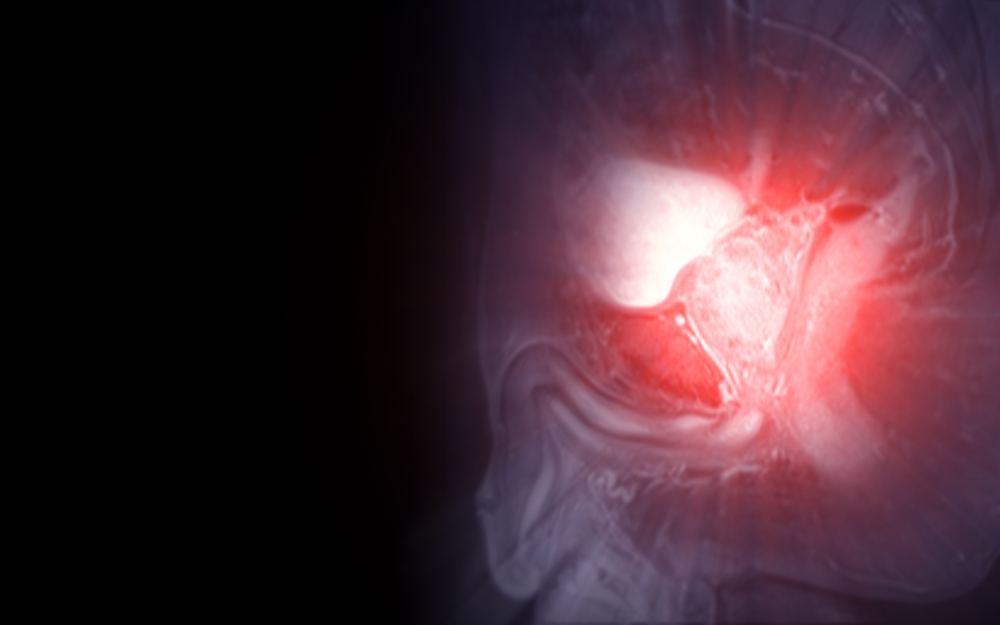
It identifies suspicious areas that correlate with cancerous tissue, even those that might be subtle to the human eye. These areas are then highlighted with color-coded overlays directly on the T2-weighted images.
This automation transforms the reading process. Instead of starting with a blank canvas and searching for a signal in the noise, the radiologist starts with a “pre-read” map. They can immediately focus their attention on the areas the AI has flagged, verifying or dismissing them based on their expert judgment.
Automated Risk Scoring
Beyond just finding a lesion, prostate MRI interpretation requires risk assessment. Is this aggressive cancer, or is it indolent?
ProstatID assigns a probabilistic risk score to each detected lesion. This score serves as an objective “second opinion.” If a radiologist is on the fence between a PI-RADS 3 and 4, the AI’s risk assessment provides a data point to help tip the scale toward a more confident decision.
The Gains: Why Radiologists Embrace AI Assistance
The narrative that AI is a threat to radiologists is fading fast. It is being replaced by the realization that AI is a tool for empowerment. Here is what radiologists actually gain when they bring tools like ProstatID into their practice.
1. Enhanced Diagnostic Confidence
Uncertainty is stressful. Every radiologist knows the feeling of staring at a “grey area” lesion, wondering if they are making the right call.
AI provides a safety net. When the AI’s findings align with the radiologist’s impression, it reinforces their decision. When there is a discrepancy—for example, the AI flags a region the radiologist initially scanned past—it prompts a second look. This “tap on the shoulder” prevents “satisfaction of search” errors, where a reader stops looking after finding one abnormality, potentially missing a second, co-existing cancer.
This boost in confidence is invaluable, especially for general radiologists who may not read prostate MRI exclusively but still need to deliver high-quality reports.
2. Reduction in Inter-Reader Variability
Standardization is the holy grail of radiology. We want a patient to get the same diagnosis regardless of which doctor reads their scan or what time of day it is.
AI acts as a standardizing force. Because the algorithm is consistent—it doesn’t get tired, distracted, or hungry—it provides a baseline of interpretation that is uniform across all cases. By anchoring their reads with AI data, radiology groups can narrow the gap between their most and least experienced readers. This consistency improves the reputation of the imaging center and builds trust with referring urologists.
3. Alleviation of Cognitive Load and Burnout
Burnout in radiology is real and rising. The mental energy required to process complex MRI data for hours on end is draining.
Radiologist efficiency improves when the “grunt work” is removed. By automating segmentation and pre-identifying lesions, AI lowers the cognitive barrier to entry for each case. The radiologist doesn’t have to expend mental energy hunting; they can spend it deciding.
This shift from “search and detect” to “verify and diagnose” makes the workflow smoother and less exhausting. A less fatigued radiologist is a happier, more accurate radiologist.
4. Improved Workflow Efficiency (Throughput)
Time is the most limited resource in healthcare. While the primary goal of AI is clinical accuracy, the efficiency gains are undeniable.
Because ProstatID processes the images in the cloud and returns them to the PACS in minutes (often before the patient has left the table), the data is ready when the radiologist opens the study. The automated measurements and pre-populated findings mean less time fiddling with tools and more time interpreting.
For a deeper look at how this impacts the broader healthcare ecosystem, you can read about how we Discover Our Impact on patient outcomes and workflow velocity.
Beyond Detection: AI as a Treatment Planning Partner
The radiologist’s job doesn’t end with diagnosis; their report guides the treatment plan. This is another area where AI assistance proves critical.
Urologists rely on the MRI report to decide whether to biopsy, and if so, where to target. If the patient opts for surgery or radiation, the precise location of the tumor determines whether nerve bundles can be spared to preserve sexual function and continence.
ProstatID provides 3D visualizations and precise tumor margins that go beyond standard text descriptions. This rich data helps the entire care team visualize the disease burden relative to critical anatomy. It bridges the gap between the dark room of radiology and the bright lights of the operating theater.
To learn more about this crucial handoff, explore our article on Beyond Detection: How ProstatID™ Aids in Treatment Planning.
Addressing the Skepticism: The “Black Box” vs. Clinical Validation
It is natural for scientists and physicians to be skeptical of “black box” algorithms. Radiologists want to know why the AI is calling a lesion.
This is why transparency and validation are key. ProstatID isn’t just a theoretical model; it is an FDA-cleared medical device. Its performance has been validated in clinical studies against biopsy results. This ground-truth training ensures that the AI is detecting actual pathology, not just mimicking human patterns.
Furthermore, ProstatID is designed to be a “White Box” in practice. It doesn’t just spit out a text result; it shows its work via image overlays. The radiologist can see exactly which pixels triggered the alert. This transparency allows the physician to remain the captain of the ship, using the AI as a trusted navigator rather than an autopilot.
The “Zero-Click” Experience
For ProstatID benefits to be realized, the tool must be easy to use. Radiologists have no patience for clunky software that requires logging into separate portals or manually uploading files.
The ideal AI integration is invisible until it is needed. ProstatID achieves this through a seamless, vendor-agnostic design.
- Scanner to Cloud: Images are sent automatically from the MRI scanner.
- Processing: The AI analyzes the data securely.
- Cloud to PACS: Results appear as a new series in the patient’s list on the radiologist’s existing workstation.
There are no new buttons to push, no new logins to remember. It just works. This “Zero-Click” integration ensures that efficiency gains aren’t lost to administrative friction.
A Support System for the Caregiver
Ultimately, the beneficiary of a more confident, less fatigued radiologist is the patient—and their family. The ripple effects of a missed diagnosis or a false positive are profound. The anxiety of a “wait and see” recommendation or the trauma of an unnecessary biopsy affects not just the man, but his partner and children.
By arming radiologists with the best possible tools, we are reducing the likelihood of these adverse events. We are enabling faster, more definitive answers. This human impact is why we built this technology. For families navigating this journey, we have compiled resources specifically for caregivers to help them understand the role of advanced imaging in their loved one’s care.
Conclusion: The New Standard of Care
The era of unaided prostate MRI interpretation is drawing to a close. The complexity of the exam, combined with the rising volume of cases, makes manual interpretation unsustainable as the sole standard.
AI in radiology offers a compelling path forward. By automating the tedious tasks of measurement and segmentation, and by providing a sophisticated second set of eyes for lesion detection, tools like ProstatID are elevating the practice of radiology.
What do radiologists gain?
- Time: Reclaimed from manual tasks.
- Confidence: Bolstered by objective data.
- Consistency: Across cases and readers.
- Peace of Mind: Knowing they have leveraged every available tool to ensure accurate patient care.
As we look to the future, the question is no longer “Will AI replace radiologists?” but “How quickly can radiologists adopt AI to serve their patients better?” The technology is here, it is proven, and it is ready to work.
For more information on the science and team behind this technology, visit About Bot Image, Inc or explore Future Applications to see where AI is heading next.
Pioneering Cancer Detection with AI and MRI (and CT)
At Bot Image™ AI, we’re on a mission to revolutionize medical imaging through cutting-edge artificial intelligence technology.
Contact Us