
Blog
The Role of AI in Identifying Invisible or Subtle Lesions in Prostate MRI

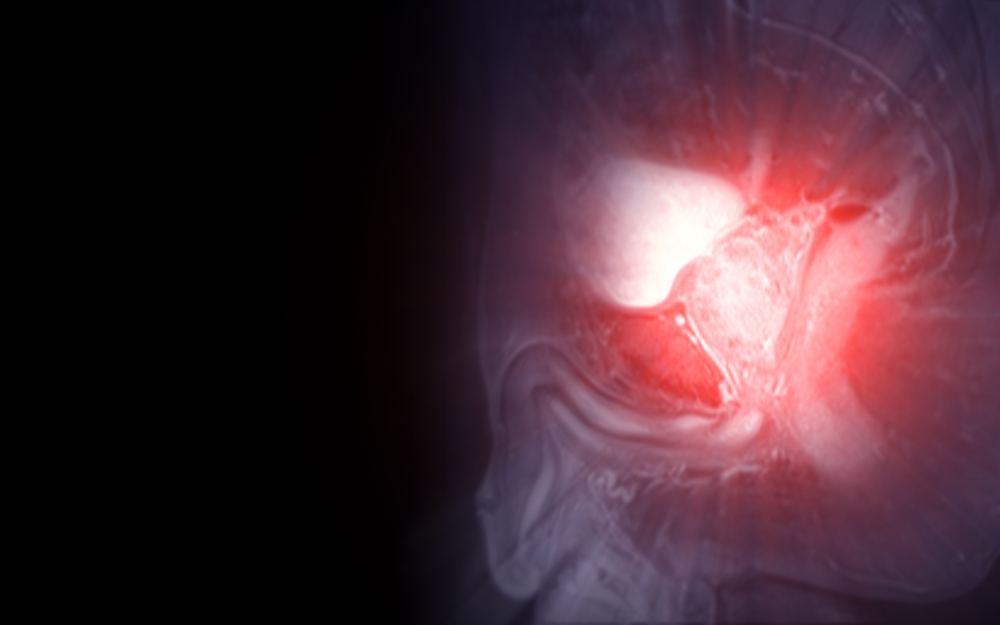
Medical imaging is often compared to photography, but in the case of prostate cancer, it is more like solving a complex puzzle where half the pieces are turned face down. For decades, radiologists have relied on their visual acuity and experience to interpret the intricate grayscale shadows of a Magnetic Resonance Imaging (MRI) scan. Their goal: to spot the telltale signs of malignancy amidst a chaotic background of healthy tissue, benign growth, and inflammation.
It is a task of immense difficulty. Unlike a broken bone that shows up clearly on an X-ray, prostate cancer can be notoriously elusive. It often disguises itself, blending perfectly with the surrounding gland. These are the “invisible” or subtle lesions—cancers that are physically present but radiologically hidden.
This is where Artificial Intelligence (AI) is changing the game. By moving beyond visual interpretation and into the realm of quantitative data analysis, AI in prostate MRI is revealing what was once unseen. It is providing a new lens through which we can perform subtle lesion detection and invisible cancer identification, offering hope for earlier diagnosis and better outcomes for millions of men.
In this comprehensive guide, we will explore the science behind this breakthrough, why human eyes struggle with certain lesions, and how AI is acting as the ultimate detective in oncological care.
The Challenge of the “Invisible” Enemy
To understand the solution, we must first appreciate the problem. The prostate is a small, walnut-sized gland located deep in the pelvis. It is not a uniform block of tissue; it is divided into different zones (peripheral, transition, central) and is often riddled with benign conditions that mimic cancer.
The Camouflage of Isointense Lesions
In radiology, contrast is king. We look for a dark spot on a light background (or vice versa). However, roughly 20-30% of significant prostate cancers are “isointense.” This means they have the same signal intensity (brightness/darkness) as the healthy tissue around them on standard MRI sequences like T2-weighted imaging.
To the human eye, an isointense lesion is effectively invisible. It is like trying to find a specific drop of water in a swimming pool. Without a distinct visual border or a difference in shade, even the most experienced radiologist can scroll right past a dangerous tumor.
The Noise of Benign Conditions
The prostate is prone to non-cancerous changes that create “visual noise.”
- Benign Prostatic Hyperplasia (BPH): This condition causes the prostate to grow and develop nodules. These nodules can look terrifyingly similar to tumors on an MRI.
- Prostatitis: Inflammation causes changes in blood flow and water diffusion that mimic high-grade cancer.
This background noise creates a camouflage effect. A subtle cancer might be hiding behind a BPH nodule or buried within an area of inflammation. This is the primary reason for false-negative MRI reports—cases where the scan is read as “normal,” but the patient actually harbors significant disease.
How AI “Sees” Differently
Artificial Intelligence does not “see” an image in the way a human does. It does not have a retina or an optic nerve. Instead, it reads the MRI as a massive dataset of numbers. Every pixel in an image corresponds to a numerical value representing signal intensity.
The Science of Radiomics
This numerical approach is the foundation of a field called “radiomics.” While a human might describe a region as “slightly dark,” AI calculates the exact statistical distribution of the pixel values. It looks at hundreds of quantitative features that are imperceptible to human vision.
- Entropy: A measure of randomness or chaos in the texture. Malignant tumors tend to have higher entropy because cancer cells grow in disorganized patterns compared to the orderly structure of healthy cells.
- Skewness and Kurtosis: These statistical measures describe the shape of the distribution of pixel intensities. They can reveal subtle shifts in tissue density that correlate with early malignancy.
- Texture Analysis: AI analyzes the spatial relationship between pixels. It asks: “Does this pixel usually have a neighbor that is 10% brighter?” These micro-patterns create a unique “fingerprint” for cancer.
By analyzing these features, AI in prostate MRI can detect subtle lesion detection cues that simply do not exist in the visual spectrum. It effectively turns “invisible” isointense lesions into visible data points.
The “Field Effect”: Finding Cancer Before It’s Visible
One of the most fascinating capabilities of modern AI is its ability to detect the “field effect.”
In biology, a tumor is not an island. It interacts with the tissue around it. Aggressive cancer cells release chemical signals (cytokines, growth factors) that alter the surrounding microenvironment. They might cause subtle changes in blood vessel permeability or collagen structure in the “healthy” tissue millimeters away from the actual tumor.
Identifying the Halo
Human eyes focus on the tumor itself. If there is no tumor mass visible, the scan is negative.
AI, however, can detect the “halo” of biological disturbance caused by the field effect. Even if the core of the tumor is isointense and invisible, the AI might pick up on the radiomic ripple effect in the surrounding tissue. This allows for invisible cancer identification—flagging a region as suspicious because the neighborhood looks “disturbed,” even if the house looks normal.
This capability is revolutionary. It means we potentially don’t need to wait for a tumor to grow large enough to be visually distinct before we can find it. We can catch it in the “molecular pre-cursor” stage where it is barely a mass at all.
AI in Prostate MRI: The Mechanisms of Detection
How does this translate to clinical practice? Let’s break down the specific MRI sequences and how AI enhances them.
Diffusion-Weighted Imaging (DWI) and ADC
DWI is arguably the most important sequence for cancer detection. It measures the movement of water molecules. In cancer, cells are packed tightly together, restricting water movement. This shows up as a dark spot on the ADC (Apparent Diffusion Coefficient) map.
- The Human Limit: A radiologist looks for a spot that is “darker than average.” But how dark is dark? It is subjective.
- The AI Advantage: AI measures the exact ADC value. It knows that a value of 700 correlates with Gleason 7 cancer, while 900 might be benign. It can spot a small cluster of pixels with “cancer-range” values that are too small for a human to notice against a heterogeneous background.
Dynamic Contrast-Enhanced (DCE) MRI
This sequence involves injecting a dye and watching how it flows in and out of the prostate. Cancer usually has “greedy” blood vessels that suck up dye fast and wash it out fast.
- The Human Limit: The human eye cannot track the wash-in/wash-out rate of every pixel simultaneously over time. We rely on “eyeballing” the general curve.
- The AI Advantage: AI analyzes the “kinetic curve” of every single voxel (3D pixel) in real-time. It can identify a tiny focus of 500 cells that are behaving like cancer (rapid washout) even if the surrounding tissue is normal.
For a deeper look at how these technologies come together in a clinical product, explore our ProstatID™ page. It details how our software utilizes these principles to assist radiologists.
The Problem of the Transition Zone
The prostate has different zones, and the Transition Zone (TZ) is the radiologist’s nightmare. This is where BPH (benign enlargement) occurs. The TZ is naturally chaotic, filled with swirling nodules and stromal tissue.
Finding a cancer in the Transition Zone is like trying to find a specific gray rock in a pile of gray rocks.
AI as the Pattern Matcher
This is where Deep Learning, a subset of AI, shines. Deep Learning models are trained on thousands of confirmed TZ cancers. They learn the subtle morphological differences between a BPH nodule and a TZ tumor.
- BPH Nodule: Often has a “capsule” or a clear rim around it.
- TZ Cancer: Often has “erased charcoal” appearance—smudged edges without a clear capsule.
These distinctions are often too subtle for the human eye, especially in a busy clinical setting. AI, however, is a relentless pattern matcher. It can apply these subtle rules to every nodule in the gland, flagging the one that breaks the pattern. This makes subtle lesion detection in the Transition Zone far more reliable.
Case Studies: When AI Sees What Humans Miss
To illustrate the power of invisible cancer identification, let’s look at hypothetical scenarios based on typical clinical findings.
Case 1: The Anterior Horn Lesion
A 60-year-old patient has a rising PSA but a “normal” DRE (digital rectal exam). His MRI is read by a general radiologist as PI-RADS 2 (low probability of cancer). The prostate is large, and the “noise” of BPH is high.
The Miss: The cancer is located in the far anterior horn of the prostate, a notorious blind spot. It is a flat, infiltrative lesion that doesn’t form a round ball, so it doesn’t look like a typical tumor.
The AI Find: The AI software processes the scan. It ignores the shape (which fooled the human) and focuses on the texture (radiomics). It identifies a patch of tissue in the anterior horn with high entropy and restricted diffusion. It places a bounding box around it.
The Outcome: A targeted biopsy confirms high-grade cancer. Without AI, this patient would have been sent home, only to return years later with advanced disease.
Case 2: The “Negative” Biopsy Patient
A patient has had three blind biopsies over five years. All negative. Yet his PSA keeps climbing. He is anxious and frustrated. He gets an MRI, but it is read as negative because the lesion is isointense.
The AI Find: The AI detects a field effect. It notices that the tissue architecture in the central zone is subtly distorted, even though there is no mass. It highlights a region for “saturation biopsy.”
The Outcome: The urologist targets that specific area. They find a small but aggressive tumor that was blending in with the background stroma.
Why Humans Miss Subtle Lesions
It is important to emphasize that radiologists are highly skilled professionals. When they miss a lesion, it is rarely due to incompetence; it is due to human physiological and cognitive limitations.
Satisfaction of Search
This is a well-documented cognitive bias. When a radiologist finds one abnormality (say, a large BPH nodule), their brain subconsciously signals “Task Complete.” They stop searching as rigorously for a second, more subtle abnormality.
AI has no such bias. It does not get “satisfied.” It scans the entire volume of the gland with equal intensity, ensuring that a subtle cancer isn’t overlooked just because a benign nodule stole the spotlight.
Fatigue and Inattentional Blindness
Radiology is visually exhausting. After reading 30 scans, the brain’s ability to distinguish low-contrast objects diminishes. This is biology.
AI never gets tired. It offers the same level of subtle lesion detection at 5:00 PM on a Friday as it does at 8:00 AM on a Monday. It acts as a safety net, catching the subtle signals that a fatigued human brain might filter out.
The Impact on Caregivers and Families
The uncertainty of a “negative” MRI that doesn’t explain a rising PSA is tormenting for patients and their families. It leads to a cycle of anxiety, repeat testing, and the looming fear that “something is being missed.”
When AI uncovers these invisible lesions, it brings answers. While a cancer diagnosis is never “good” news, a correct diagnosis is always better than a missed one. It allows for action. It transforms the unknown into a plan.
For families navigating this difficult terrain, understanding the technology can be empowering. We have created a dedicated resource to help support networks understand the journey. Please visit our page For Caregivers for guidance and support.
From Detection to Treatment
Finding the lesion is only step one. The precision of AI in outlining the boundaries of invisible lesions has profound implications for treatment.
Treatment Planning
If a surgeon cannot see the edges of a tumor clearly, they have to remove wide margins of healthy tissue to be safe. This increases the risk of side effects like incontinence and impotence.
Because AI uses quantitative data to define the exact extent of the disease (segmentation), it provides surgeons with a precise map. They can see exactly where the cancer ends and the healthy nerves begin. This is crucial for nerve-sparing surgeries and focal therapies (where only the tumor is treated).
To learn more about how AI influences the next steps after diagnosis, read our article on Beyond Detection: How ProstatID™ Aids in Treatment Planning.
The Future of Invisible Lesion Detection
We are currently in the early stages of what is possible. As AI models ingest more data, their sensitivity to subtle patterns will only increase.
Multi-Modal AI
Future systems will not just look at MRI. They will integrate the MRI data with genomics (genetic risk scores) and pathology slides. An AI might say, “Given this patient’s genetic profile, this subtle shadow on the MRI is 99% likely to be cancer,” whereas in a low-risk patient, it might dismiss it.
Predictive AI
Ideally, we want to find the lesion before it becomes a lesion. Researchers are working on AI that can predict where cancer will develop based on pre-cancerous changes in the tissue texture. This would move us from early detection to true prevention.
Stay updated on these cutting-edge developments by visiting our Blogs, Articles & News section.
Conclusion: Lighting Up the Dark
The narrative of medical imaging has always been about seeing more. We moved from X-rays to CT scans, and from CT to MRI. Now, we are making the leap from visual MRI to AI-enhanced quantitative MRI.
The role of AI in identifying invisible or subtle lesions in prostate MRI cannot be overstated. It is filling the gaps left by human vision. It is catching the cancers that hide in the dark.
- It quantifies the invisible: Turning subtle texture changes into hard numbers.
- It removes the camouflage: Using radiomics to spot tumors hidden by BPH.
- It standardizes the search: Eliminating fatigue and bias from the diagnostic process.
For the patient, this technology means the end of the “wait and see” lottery. It means that if cancer is there, we have the best possible chance of finding it early, treating it effectively, and moving on with life.
In the fight against prostate cancer, AI is turning the lights on.
Key Takeaways
- Beyond the Eye: AI analyzes pixel data (radiomics) to detect patterns invisible to the human eye, such as entropy and texture chaos.
- Isointense Lesions: A significant percentage of cancers blend in with healthy tissue; AI uses quantitative data to spot them based on density and diffusion, not just color.
- The Field Effect: AI can detect the biological disturbance in tissue surrounding a tumor, identifying cancer even before a distinct mass forms.
- Overcoming Bias: AI eliminates human cognitive biases like “satisfaction of search,” ensuring subtle secondary lesions aren’t missed.
- Precision Treatment: By accurately defining the borders of “invisible” lesions, AI aids in nerve-sparing surgery and focal therapy planning.
Frequently Asked Questions
Can AI find prostate cancer that a radiologist missed?
Yes. Studies have shown that AI can identify lesions that were initially classified as negative by human readers, particularly in difficult areas like the transition zone or anterior horn.
What makes a lesion “invisible”?
A lesion is considered radiologically invisible (or isointense) when it has the same brightness and general appearance as the surrounding healthy tissue on standard MRI sequences, making it blend into the background.
Does AI detection lead to more false positives?
It can, but modern AI systems are increasingly specifically trained to distinguish between benign inflammation and cancer, helping to keep false positives low while keeping sensitivity high.
Is this technology available now?
Yes, FDA-cleared AI platforms like ProstatID™ are currently available and being used in clinical settings to assist radiologists in detection and diagnosis.
How does AI help if the MRI looks normal?
AI looks at the “invisible” quantitative data (radiomics) behind the image. Even if the picture looks normal to the eye, the mathematical values of the pixels might indicate the presence of cancer cells.
Disclaimer: The content provided in this blog is for informational purposes only and does not constitute medical advice. Always consult with a qualified healthcare provider for diagnosis and treatment options.
Pioneering Cancer Detection with AI and MRI (and CT)
At Bot Image™ AI, we’re on a mission to revolutionize medical imaging through cutting-edge artificial intelligence technology.
Contact Us